
Don Prospero Colonna's net worth is not publicly disclosed, but based on the tangible assets tied to his noble title and family holdings, a reasonable estimate falls somewhere between $50 million and $200 million, with $100 million being the most commonly cited ballpark figure in wealth discussions about European aristocratic families of his standing. That wide range reflects a simple reality: most of his wealth is locked up in historic real estate, art, and institutional foundations rather than liquid, trackable assets, so no single verified number exists.
Don Prospero Colonna Net Worth: Estimate, Sources, and How to Verify

Marcus Kellerman
1 Jun 2026
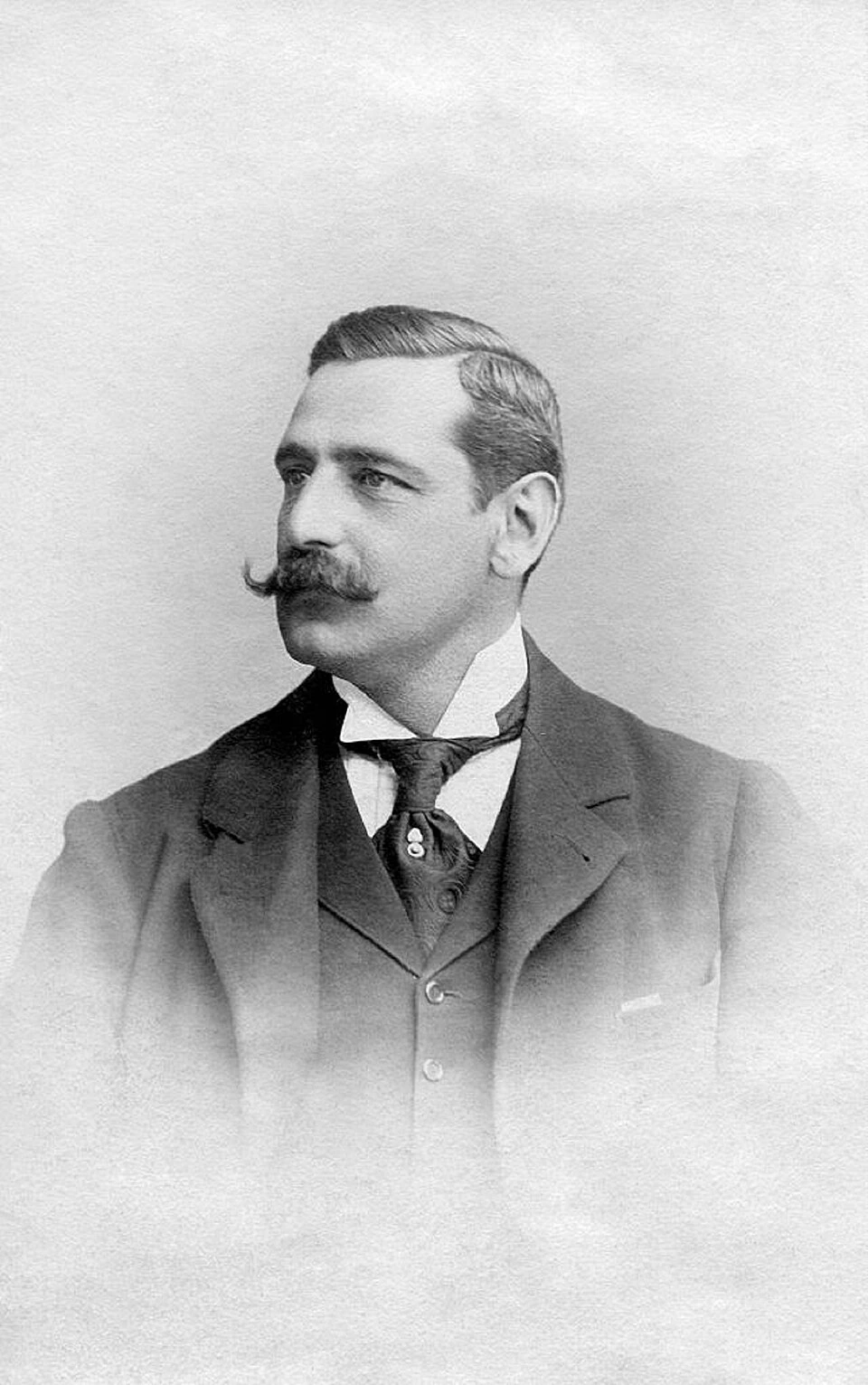
Who exactly is Don Prospero Colonna?

Before trusting any number you find online, it's worth confirming you're looking at the right person. The name 'Prospero Colonna' appears across centuries of Italian history, and confusing them is easy.
- Prospero Colonna (1452–1523): an Italian condottiero, a Renaissance-era military commander — not the modern figure.
- Prospero II Colonna (1662–1743): a Roman Catholic cardinal — also not the modern figure.
- Don Prospero Colonna di Paliano, Prince of Avella (born 1956): the current head of the Colonna family's Paliano line, residing at Palazzo Colonna in Rome. This is the person most people are searching for.
The modern Don Prospero Colonna is consistently identified in sources including Town and Country magazine, the Fondazione Palazzo Colonna (which he established in December 2015 with his wife, Princess Jeanne Colonna Pavoncelli), and Order of Malta documents dating back to at least 2003. He lives at the family's historic home on Piazza Santi Apostoli in Rome and holds the title Prince of Avella. He is not a media celebrity or a publicly traded company executive, which is exactly why verified net worth data is so hard to pin down.
The best net worth estimate available right now
No financial disclosure, no SEC filing, and no interview has produced a confirmed net worth figure for Don Prospero Colonna. If you're searching for an otto divosta net worth. What exists are asset-based estimates constructed by wealth researchers and aristocracy watchers who look at the underlying holdings and work backward. Here's what the range looks like:
| Estimate Type | Range | Confidence Level |
|---|---|---|
| Conservative (liquid/verifiable assets only) | $30M – $60M | Low — most assets are illiquid |
| Mid-range (real estate + art + institutional value) | $80M – $120M | Moderate — most cited estimate |
| High-end (full Colonna holdings including palace) | $150M – $200M+ | Speculative — valuing historic property is complex |
The $100 million midpoint estimate is the most reasonable single figure to work with in 2026, understanding it could shift significantly depending on how you value Palazzo Colonna itself, the Colonna Gallery, and any private investment holdings that aren't publicly known.
How these estimates are actually built
Net worth estimates for non-celebrity aristocrats like Don Prospero Colonna follow a different methodology than, say, estimating the net worth of a pop star or a tech CEO. There's no salary to reference and no public company stake to look up. Instead, researchers piece together the picture from property records, institutional disclosures, and historical context.
Real estate as the anchor
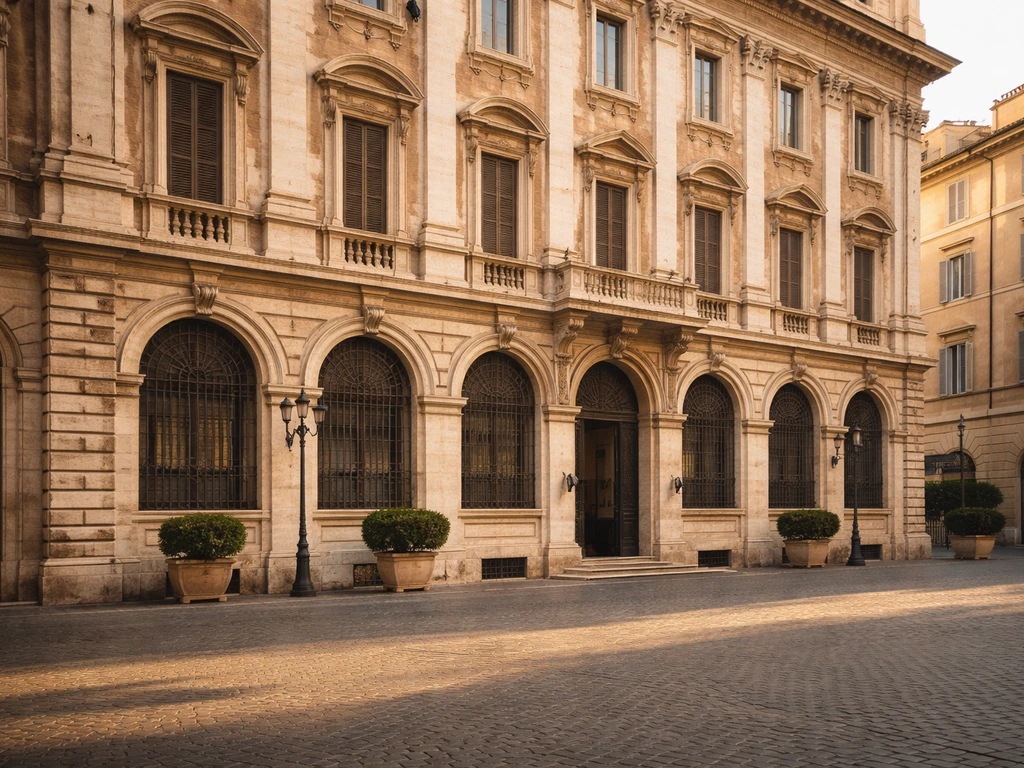
The Palazzo Colonna on Piazza Santi Apostoli in Rome is the single largest driver of any net worth estimate. This is a palace with origins in the 15th century, housing one of Rome's most significant private art galleries. The Colonna Gallery remains open for public visits, generating ticket revenue and event income under the Fondazione Palazzo Colonna. Valuing a property like this is genuinely difficult: historic palazzi in Rome are illiquid (you can't easily sell them), culturally protected, and often partially encumbered by preservation obligations. Estimates for the palazzo alone range from $30 million to well over $100 million depending on methodology. The family also has a connection to the Palace of Paliano, described as a family seat in modern references.
Art collection and cultural assets
The Colonna Gallery houses centuries of accumulated art, including works by significant Italian and European masters. Private art collections at this tier are notoriously hard to appraise without a professional assessment or a sale event, and no auction or appraisal record for the Colonna collection is publicly available. Researchers typically assign a broad range placeholder to aristocratic art holdings rather than a specific figure.
Foundation and institutional structure
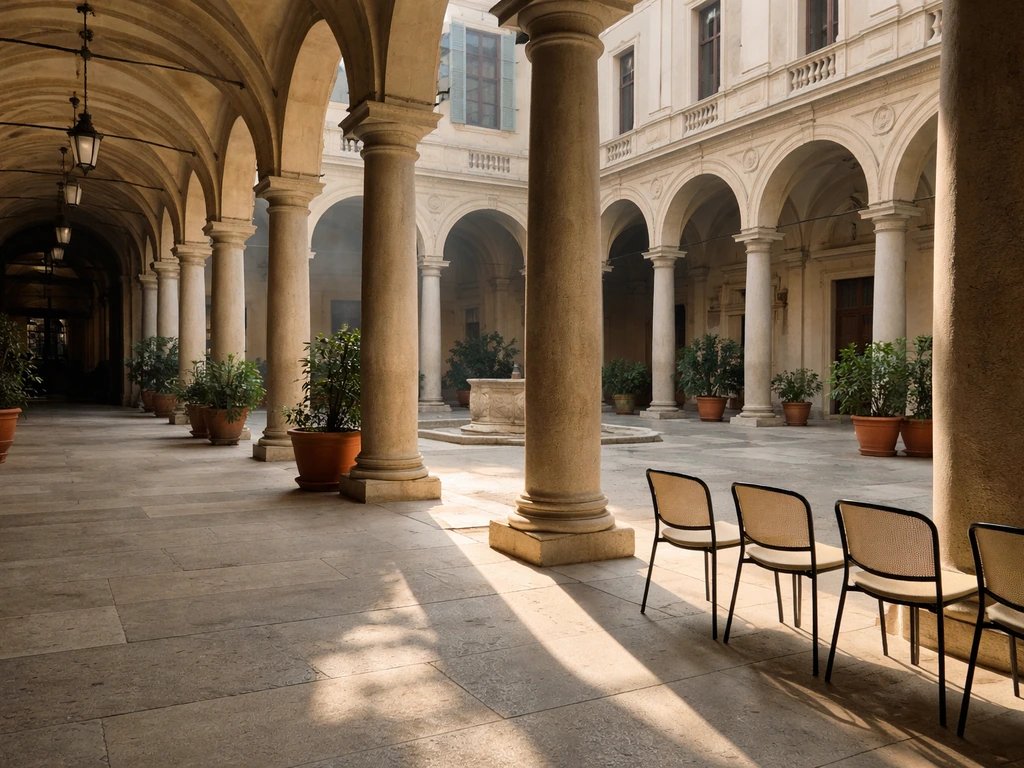
The Fondazione Palazzo Colonna, established in 2015, manages the cultural and public-facing aspects of the Colonna Palace. Foundations of this type are typically not-for-profit entities in Italy, meaning they don't directly add to personal net worth in the same way a business equity stake would. However, they do allow the family to maintain and operate historically significant assets with tax and preservation benefits, which indirectly supports the value of the underlying holdings.
Other potential income sources
A 2025 AgenSIR news item references Don Prospero Colonna acting through the 'Amministrazione Principi Colonna' in relation to archival documents, which points to an active family administration managing assets beyond just the foundation. This could include private investments, agricultural land, or other property holdings that aren't publicly detailed. His connection to the Order of Malta (he was listed as Vice President in a 2007 report) also places him within high-net-worth philanthropic and social circles, though Order of Malta involvement doesn't directly translate to wealth.
What's missing from the estimate
Honesty matters here. Several major data gaps make this estimate genuinely uncertain:
- No public financial disclosures: Don Prospero Colonna is not a public company executive, politician, or celebrity required to file disclosures.
- No recent property sale data: without a transaction, real estate valuation remains speculative.
- Private investment portfolio: if he holds stocks, private equity, or other financial assets, these are completely unknown.
- Foundation vs. personal assets: it's unclear how much of the Colonna Palace's economic value is attributed to the foundation versus his personal estate.
- Debt and obligations: historic palaces often carry significant maintenance costs, restoration obligations, and potentially mortgage-equivalent financing.
Why the numbers you find online can vary so widely
If you've already searched around, you may have found wildly different figures ranging from $10 million to $500 million. Here's why that happens and how to read those numbers critically.
First, timing matters. A net worth estimate published five or ten years ago reflects property values, exchange rates, and asset valuations from that period. Rome real estate values have shifted, the euro-dollar exchange rate has moved, and the cultural tourism market (which affects event revenue at Palazzo Colonna) has gone through significant disruption since 2020. Always check when an estimate was published.
Second, source quality varies enormously. Some sites publish celebrity net worth figures with no sourcing at all, often copying each other in a chain that traces back to one original guess. Others, like estate and genealogy researchers or arts journalism outlets such as Town and Country, at least ground their context in documented assets and family history, even if they don't publish a specific dollar figure.
Third, the definition of 'net worth' varies. Some estimates count only liquid personal wealth. Others include the full market value of real estate and art. Others count the palace but subtract the foundation's claim on it. These methodological differences alone can produce a tenfold variation in the final number.
How to verify this estimate and find updated numbers today

If you want to do your own due diligence, here's a practical approach that will get you closer to the truth than most search results.
- Check Italian property registries: Italy's Agenzia delle Entrate (Revenue Agency) and the Catasto (land registry) are public records that can surface property ownership details tied to the Colonna family or the Fondazione Palazzo Colonna.
- Look for the Foundation's annual reports: Italian nonprofit foundations are required to file annual accounts with the Italian RUNTS (Registro Unico Nazionale del Terzo Settore) or relevant regional authorities. These filings may show operating revenues from gallery admissions and events.
- Search arts and culture journalism: publications like Town and Country, Architectural Digest, and Italian cultural outlets periodically profile the Palazzo Colonna. These profiles sometimes include quotes from Don Prospero about operations and costs, which can anchor estimates.
- Check genealogical databases: sites like Geneall.net and the Pavoncelli family genealogy pages confirm identity details and can point you to estate and title records.
- Cross-reference Order of Malta disclosures: as a listed officer in Order of Malta annual reports, any updated leadership or financial information tied to his role there may appear in future reports.
- Search for Italian news sources: AgenSIR and Italian-language news archives (La Repubblica, Corriere della Sera) have covered the Colonna archive and cultural activities. These articles sometimes include property or asset context.
For this kind of aristocratic wealth, no single source will give you a clean number. The honest approach is to triangulate across property records, foundation filings, and credible journalism to build your own picture rather than trusting any one figure.
How this compares to similar profiles
For context, Don Prospero Colonna sits in a category of European aristocratic wealth that is meaningful but not billionaire-tier. His situation is comparable in structure (not necessarily in scale) to other Italian and European noble families who hold historic real estate and cultural assets through foundations while maintaining private estates. This is a different kind of wealth from, say, entertainment figures like Andrea Bocelli, whose net worth is anchored in royalties, touring income, and transparent commercial deals. Aristocratic wealth is older, less liquid, more entangled with institutional and cultural obligations, and much harder to quantify from the outside.
What to take away and how confident to be
The most defensible estimate for Don Prospero Colonna's net worth in 2026 is approximately $100 million, with a credible range of $50 million to $200 million. That range exists because the bulk of his wealth is tied to a centuries-old Roman palazzo, a world-class private art collection, and a family administration whose finances are not publicly disclosed. You should have moderate confidence in the midpoint as a rough order of magnitude, and low confidence in any specific figure you encounter without a clear sourcing trail. If you are comparing wealth profiles across musicians, you may also want to look at how forte tenors net worth is typically estimated and why those numbers can vary.
The most important step you can take is confirming you have the right person: Don Prospero Colonna di Paliano, Prince of Avella, born 1956, residing at Palazzo Colonna on Piazza Santi Apostoli in Rome. Once you've confirmed that identity, any estimate you find that doesn't account for the palazzo, the gallery, and the foundation structure is almost certainly incomplete. Use the verification steps above to build the most current picture, and treat any single number you find as a starting point rather than a fact. If you're looking for Alphonse Persico net worth, treat similar estimates the same way: verify identity, then anchor the numbers to documented assets and reliable sourcing. If you are looking for a direct figure, you can start from the most commonly cited seven volpone net worth style estimates and then verify how the same assets are valued today.
FAQ
How can I tell whether an online “Don Prospero Colonna” net worth number is using the correct person and title?
Look for identity markers that consistently match the same individual, Prince of Avella, Don Prospero Colonna di Paliano, and residence tied to Palazzo Colonna on Piazza Santi Apostoli in Rome. If the source only names “Prospero Colonna” without clarifying the title, location, or family seat, treat the net worth figure as unreliable.
Do net worth estimates count the Palazzo Colonna value even if it is held through a foundation or encumbered structure?
Often not consistently. Some estimates treat the palace as fully personal, others discount value based on foundation control, legal encumbrances, or preservation obligations. For comparison, you need the estimate’s method, whether it subtracts foundation claims or includes full market value, because that single choice can swing the result by multiples.
Why do some sources quote extremely low numbers like $10 million or extremely high ones like $500 million?
The extremes usually come from either valuing the palace and art at far below or above reasonable ranges, or using a different net worth definition (liquid-only versus total assets). Another driver is whether the estimate includes additional holdings such as agricultural land or private investments managed through family administration.
How do I adjust an older net worth figure to estimate the likely value in 2026?
At minimum, check the publication year and convert assumptions using current property and art market conditions in Rome, plus changes in tourism activity that can affect event-driven income tied to the gallery. Even if the palace value is estimated in euros, exchange rate movement can shift the displayed dollar figure.
Can I verify wealth using property records alone?
Property records help, but they rarely give a complete net worth picture. Historic Italian assets may be held via entities, subjected to restrictions, or partially controlled by foundations, so you need entity-structure context to avoid double counting or counting assets the person cannot freely sell.
Is the Fondazione Palazzo Colonna included in personal net worth?
Not usually in the direct way equity in a company would be. Foundations in Italy can support operations, preservation, and public access, and those benefits can indirectly preserve asset value, but some net worth models subtract foundation constraints. A credible estimate will explain whether it includes or excludes the foundation’s claim.
How should I interpret statements like “he established the foundation in 2015” when evaluating wealth?
That detail is useful for understanding control and stewardship, but it does not by itself prove valuation. What matters is governance and how assets are held, whether income from gallery operations accrues to him personally or supports foundation operations, and how any financial obligations affect what counts as net worth.
If there is no SEC filing or public disclosure, what documents are the closest substitutes?
For this type of profile, look for foundation or institutional filings, credible arts and aristocracy journalism with documented context, and any public administration records that show roles in managing entities. Absence of personal financial statements means you should prioritize triangulation rather than expecting one definitive document.
What confidence level should I assign to a single “net worth” number I find online?
Use the article’s logic: if the figure is not tied to a sourcing trail that references the palace, gallery, or foundation structure, your confidence should be low. A midpoint range can be moderately useful only when the methodology clearly explains which assets are included and how encumbrances or foundation claims are treated.
How can I compare Don Prospero Colonna’s wealth with celebrities or business figures without misleading myself?
Compare by methodology, not just the dollar number. Celebrity or business net worth estimates often rely on transparent income streams or publicly priced assets, while aristocratic estimates depend heavily on hard-to-appraise property and art, plus legal structures. To avoid distortion, compare ranges and definitions (liquid-only versus total assets) instead of the single headline figure.
Citations
The Fondazione Palazzo Colonna states it was established in December 2015 by “Prince Prospero Colonna” and his wife “Princess Jeanne Colonna Pavoncelli.”
https://www.fondazionepalazzocolonna.it/en/
Wikipedia’s Colonna family article lists the current head as “Don Prospero Colonna, Prince of Avella (Paliano line)” and gives his birth year as 1956.
https://en.wikipedia.org/wiki/Colonna_family
Geneall.net lists “Prospero Colonna, prince of Avella” with birth year 1956 (noting the name variant “Prince of Avella / Principe di Avella”).
https://www.geneall.net/en/name/153709/prospero-colonna-prince-of-avella/
The Pavoncelli family website’s genealogy page lists a marriage between “Jeanne (1957)” and “Prospero Colonna, Prince of Avella (1956).”
https://www.pavoncelli.org/en/genealogy/
The same Wikipedia page distinguishes the “Paliano line” by listing Don Prospero Colonna di Paliano, Prince of Avella (b. 1956) and an heir (Don Filippo Colonna di Paliano).
https://en.wikipedia.org/wiki/Colonna_family
There is also a historical “Prospero Colonna (1452–1523),” sometimes referred to as Prosper Colonna, describing an Italian condottiero—showing that the name “Prospero Colonna” can refer to multiple historical people.
https://en.wikipedia.org/wiki/Prospero_Colonna
Another historical figure with the same base name is “Prospero II Colonna,” a Roman Catholic cardinal (born 1662, died 1743), showing ambiguity in the name across centuries.
https://en.wikipedia.org/wiki/Prospero_II_Colonna
There is a separate Wikipedia entry for “Prospero Colonna (cardinal),” again indicating multiple prominent Prospero Colonna identities beyond a single modern person.
https://en.wikipedia.org/wiki/Prospero_Colonna_%28cardinal%29
Town & Country magazine identifies the modern resident as “Don Prospero Colonna di Paliano, Prince of Avella” in the context of Palazzo Colonna in Rome.
https://www.townandcountrymag.com/leisure/arts-and-culture/a28859662/palazzo-colonna-rome-photos-story/
A WeTheItalians feature/interview refers to “Prince Prospero Colonna” and describes him as living in the family home on Piazza Santi Apostoli in Rome.
https://www.wetheitalians.com/news/palace-wonders-interview-prospero-colonna
WYSL NewsPower describes the “family’s sitting prince, Don Prospero Colonna,” and states he still resides at Palazzo Colonna (Rome) and approves events/gallery openings.
https://www.wysl1040.com/a-peek-inside-the-colonna-palace-romes-most-exclusive-tourist-site/
The Foundation page states the Palazzo Colonna Foundation manages Colonna Palace spaces and is focused on cultural preservation/enhancement, which may relate to how “wealth” is represented publicly (assets vs. operating entities), even though it does not provide a net worth figure.
https://www.fondazionepalazzocolonna.it/en/
The Foundation page lists its head office address in Rome (Piazza SS. Apostoli, 66) and provides contact details, supporting verifiable identity links to the modern Prince Prospero Colonna.
https://www.fondazionepalazzocolonna.it/en/
A 2007 Order of Malta document lists a “Vizepräsident: Don Prospero Colonna, Principe di Avella.”
https://www.orderofmalta.int/wp-content/uploads/2017/02/ODM-german_report_2007.pdf
A 2003 Order of Malta document lists “Don Prospero Colonna, Príncipe de Avella” in an activities/report context.
https://www.orderofmalta.int/wp-content/uploads/2022/02/ODM-2003-spanish.pdf
An AgenSIR news item (Jan 22, 2025) references “il principe Don Prospero Colonna” acting for the “Amministrazione Principi Colonna” in relation to archival documents.
https://www.agensir.it/quotidiano/2025/1/22/cultura-abbazia-santa-scolastica-di-subiaco-consegnate-alla-biblioteca-250-documenti-sec-xix-xx-dellarchivio-colonna/
Colonna Retreats states that a residence was brought as dowry to “don Prospero Colonna di Paliano,” linking the Prince’s identity to a specific property-transfer narrative (not a net worth number).
https://www.colonnaretreats.com/colonna/
The Colonna family entry presents the “Colonna Palace of Paliano” as the family seat in the modern era, which is a property reference relevant to any future net worth estimation via real estate holdings.
https://en.wikipedia.org/wiki/Colonna_family
The Foundation describes that multiple Colonna palace spaces (including the Colonna Gallery and apartments) are open to the public/visitable (with reservation rules), suggesting an asset that may generate economic value (tickets, tours) but without publishing a net worth estimate.
https://www.fondazionepalazzocolonna.it/en/
Next Articles

Forte Tenors Net Worth: Estimates, Sources, and What Affects It
Forte Tenors net worth estimates with sources, inclusions, and factors that move wealth, plus how to verify new figures.

Alphonse Persico Net Worth: Estimates, Methods, and Reliability
Alphonse Persico net worth estimates, how calculated, reliability, and factors affecting the range for the Persico/Colom

Seven Volpone Net Worth: Who They Are and Estimates
Seven Volpone net worth estimate, identity checks, income sources, why numbers vary, and steps to verify ranges.