
Il Divo's group net worth is most commonly estimated in the range of $30 million to $44 million depending on which site you check and what methodology they use, but those numbers are aggregated estimates built from income modeling, not audited financial statements. If you want to compare this to an individual-member estimate such as alphonse persico net worth, remember that group and personal wealth are calculated differently Il Divo's group net worth. If you want individual member figures, you need to look up each singer separately, because the group number and the per-person number are calculated very differently and often don't add up to the same total.
Il Divo Net Worth: How to Estimate Group and Member Wealth

Marcus Kellerman
26 Apr 2026
Group net worth vs. member net worth: why these are two different questions
When people search for 'Il Divo net worth,' they usually want one of two things: a single number representing the group as a business, or the individual wealth of the singers involved. The problem is that most net-worth sites blur these two things together, so you end up comparing apples to oranges without realizing it.
The group-level estimate tries to capture revenue flowing through the Il Divo brand: touring income, record sales, streaming royalties, licensing, and any business entity assets. The member-level estimate, on the other hand, reflects each singer's personal net worth, which includes their cut of Il Divo income plus anything else they've earned independently (solo projects, other collaborations, personal investments, real estate).
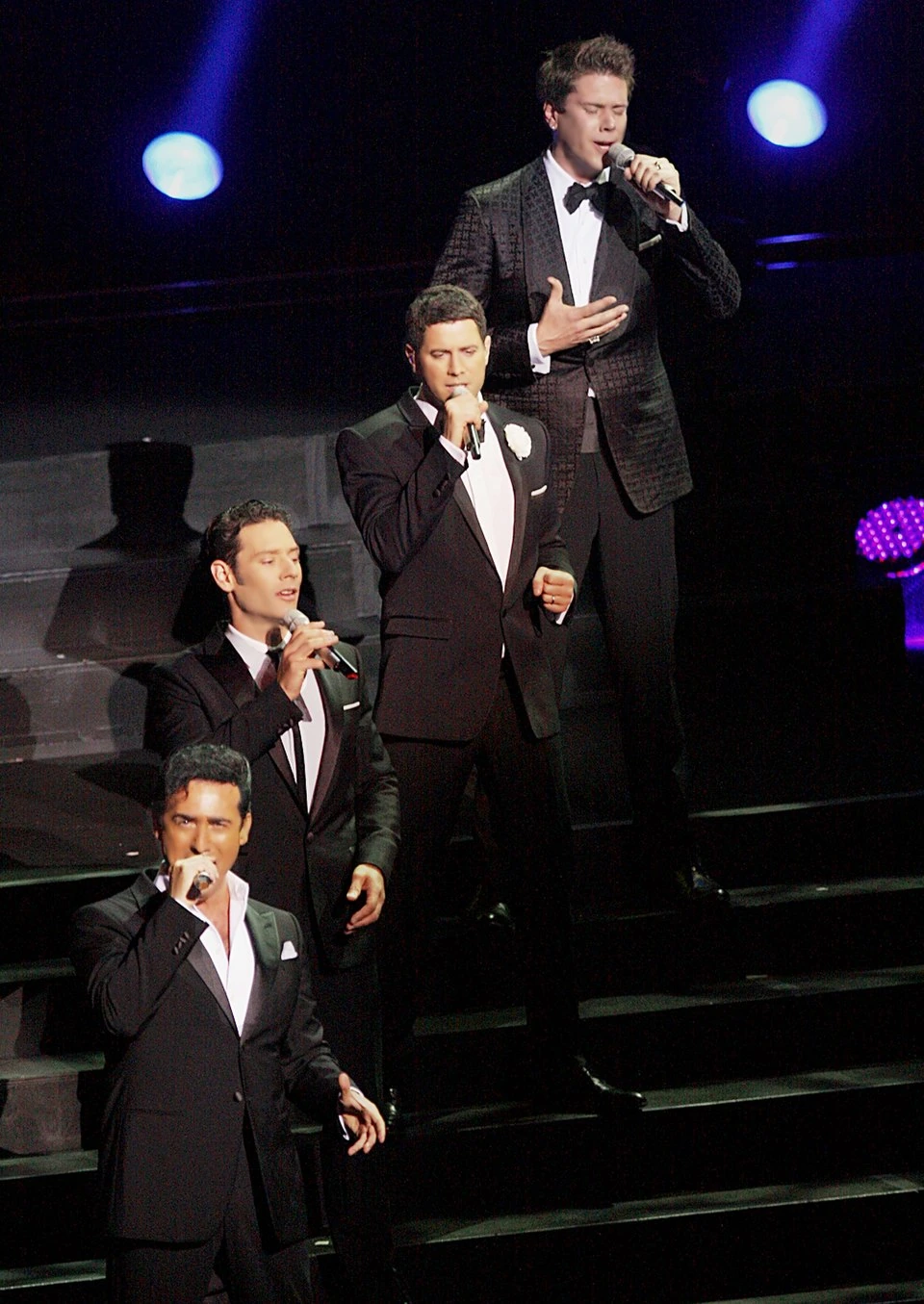
There's also a membership complication worth knowing. The classic Il Divo lineup was David Miller (American tenor), Sébastien Izambard (French tenor), Urs Bühler (Swiss tenor), and Carlos Marín (Spanish baritone). Carlos Marín passed away in December 2021, and Steven LaBrie later joined the group as his replacement. So if you're comparing net-worth pages across different sites, some will include Marín as a legacy member, others will list LaBrie, and a few will show both. That alone can make the numbers look wildly inconsistent when they're really just reflecting different membership snapshots.
How net worth estimates are actually calculated (and why they vary so much)

No net-worth website has access to Il Divo's bank accounts, royalty statements, or private financial records. Every figure you see is an estimate, and the methodology behind it matters a lot. Here are the three main approaches you'll encounter:
- Public sources plus private tips: Sites like CelebrityNetWorth explicitly state they use 'data drawn from public sources' supplemented by 'private tips,' meaning some figures are based on unverified insider information rather than any documented filing.
- Social and digital signal modeling: Sites like PeopleAI state their figures are calculated via 'a combination of social factors,' essentially using online engagement and visibility metrics as proxies for income. That's a very indirect way to estimate wealth.
- Earnings forecasting: Sites like Popnable frame their numbers as earnings forecasts based on sponsorship potential, online indicators, and publicly available performance data. That's more of a revenue projection than a true net-worth calculation.
These three approaches are not comparable. A social-factor model might land on $44 million for the group while an earnings-forecast model produces something much smaller. Neither is wrong in absolute terms, but you can't treat them as equivalents. The only way to get a genuinely defensible wealth estimate would be to model actual income streams against known expenses, tax obligations, and asset holdings, and that level of data simply isn't public for Il Divo.
Finding the most credible group-level estimate
For a group-level figure, the most useful starting point is a net-worth reference database that aggregates multiple estimates and gives you context about the source. Look for sites that show a methodology note or disclaimer alongside the number, not just a headline dollar figure. A number with no explanation is almost always recycled from another site without any independent verification.
As of early 2026, the most commonly cited group-level estimate sits around $44 million on model-based sites. If you want a member-by-member view, look up the specific seven Volpone Net Worth figures for each performer instead of relying on the group number group-level estimate. If you are specifically looking for Otto Divosta net worth, use the same member-by-member approach and cross-check the reported figures across multiple sources. That number is plausible given Il Divo's commercial track record: the group has sold over 30 million albums worldwide, released more than 10 studio albums, and has toured extensively across multiple continents over more than two decades. Wikipedia riporta che Il Divo ha venduto oltre 30 milioni di copie di album a livello mondiale, indicandola come cifra “as of 2018” blank" rel="noopener noreferrer">sold over 30 million albums worldwide. If you search for forte tenors net worth, compare their reported figures across multiple sources just like you would for Il Divo. A group with that kind of output and longevity in the classical-crossover space would realistically have generated significant cumulative revenue, even if the exact distribution among members and after costs is unknown. Don Prospero Colonna net worth is often reported in a similar “estimate range” format, so it helps to compare sources and look for methodology notes rather than trusting one headline figure.
One useful reality check: UK company filings for entities like 'IL DIVO TOURING LIMITED' are publicly accessible and can give you a rough sense of the business entity's financial position at a given point in time. That said, touring company filings reflect operational accounting, not the personal wealth of the artists, so don't confuse a negative company net worth figure (which can simply reflect how touring expenses are structured) with the performers being broke.
Individual member net worth: what the numbers look like and how to compare them

Member-level estimates vary dramatically depending on the source. Here's a snapshot of what major net-worth sites report, purely to illustrate the inconsistency you should expect rather than to endorse any single figure:
| Member | CelebrityNetWorth Estimate | PeopleAI Estimate (2026) | Notes |
|---|---|---|---|
| David Miller | $22 million | $19 million | American tenor; founding member |
| Urs Bühler | $2 million | Not consistently listed | Swiss tenor; founding member; wide discrepancy across sites |
| Sébastien Izambard | Not widely listed | Not consistently listed | French tenor; founding member; fewest separate pages |
| Carlos Marín | $20 million (at death) | Legacy figure | Spanish baritone; passed away December 2021 |
| Steven LaBrie | Not widely listed | $1.62 million (Feb 2026) | Replacement member; fewer pages available |
The discrepancies here are striking. Urs Bühler, a founding member with the same two-decade run as David Miller, is estimated at $2 million by CelebrityNetWorth but effectively absent from PeopleAI's major listings. That's not necessarily evidence that one site is right and the other wrong; it's evidence that these models are using different inputs and assumptions. If you're doing a serious comparison of Il Divo singers' net worth, you need to look at multiple sources per member and triangulate rather than accepting any single figure.
For members like Sébastien Izambard and Steven LaBrie, the coverage is thinner because they have lower individual public profiles compared to David Miller or Carlos Marín. Fewer pages means fewer data points, which means the estimates are even less reliable. This is worth keeping in mind when you're researching the full roster rather than just the most prominent names.
Where Il Divo's money actually comes from
Understanding the income sources makes the estimates feel more grounded. Il Divo's wealth is built on several interconnected streams, and knowing how each works helps you judge whether a given estimate is realistic.
Album sales and streaming

More than 30 million albums sold globally is a genuinely remarkable commercial achievement for a classical-crossover act. Physical and digital album sales generate upfront revenue, while streaming royalties create an ongoing income stream that compounds over time. For a group with a catalog spanning 20-plus years, the cumulative streaming income alone can be substantial, even if per-stream rates are modest.
Touring and live performance
Touring has historically been the biggest single income driver for established acts, and Il Divo fits that pattern. The group has performed at major arenas and venues globally, with ticket prices in the premium classical-pop range. A successful world tour can generate tens of millions in gross revenue, with a meaningful percentage flowing to the artists after production costs, management fees, and taxes.
Royalties and publishing

Songwriting and publishing royalties add up differently depending on how much original composition each member contributes versus performing covers or licensed arrangements. Il Divo's catalog includes both original material and reimagined classics, which means the royalty picture is mixed. Performance royalties (from radio, TV, and streaming) are ongoing regardless of whether the group is actively touring.
Endorsements and sponsorships
Endorsement income for classical-crossover artists is generally more modest than for pop or sports figures, but it's not zero. Il Divo's brand, which positions itself at the intersection of classical prestige and mainstream accessibility, attracts certain luxury and lifestyle sponsors. Some net-worth models (particularly the social-factor approaches) over-weight sponsorship potential, which can inflate estimates.
Personal business and real estate
Individual member wealth can include real estate holdings, personal business interests, and investments unrelated to Il Divo. This is the hardest component to model from public data, and it's often the most significant differentiator between members' personal net worths even when their Il Divo income is roughly equal.
How to cross-check figures and spot unreliable claims

Not all net-worth claims deserve equal weight. Here are the red flags that tell you a figure probably isn't worth trusting:
- No methodology disclosed: If a site gives you a number without explaining how it was derived, treat it as a guess recycled from somewhere else.
- Identical numbers across multiple sites: When you see the exact same figure on five different pages, it usually means they all copied each other rather than independently calculating anything.
- No update date: Net worth estimates that haven't been refreshed in years may not reflect career changes, deaths (relevant for Carlos Marín), or new touring activity.
- Extreme outliers without explanation: A $2 million estimate for Urs Bühler alongside a $22 million estimate for David Miller from the same source deserves scrutiny. Are they using different methodologies for different members? Are they capturing different income streams?
- Conflating group revenue with personal net worth: Some sites will describe Il Divo's total album sales revenue and then present that figure as 'net worth,' ignoring costs, taxes, splits, and the difference between gross revenue and personal wealth.
- Framing earnings forecasts as net worth: A predicted annual earnings figure is not the same as a cumulative net worth. If a site says '$20,200 estimated earnings' and then also claims a '$44 million net worth,' those are measuring completely different things.
A more reliable cross-check process involves pulling figures from at least two or three independently-sourced sites, noting the methodology each uses, and looking for a reasonable range rather than a single authoritative number. If most serious sources cluster between $30 million and $45 million for the group, that range is more useful than any single point estimate.
It's also worth comparing Il Divo's estimated wealth against peers in the same genre. Classical-crossover acts with similar commercial profiles, like tenors with comparable album sales and touring histories, can serve as informal benchmarks. If you're already familiar with figures for artists like Andrea Bocelli, who operates in a related but higher-profile tier of the classical-crossover world, you have a useful upper-bound reference for what serious success in this genre looks like financially. Andrea Bocelli net worth figures are often higher-profile benchmarks, but you still want to compare them using the same methodology and time frame.
How to use a net-worth reference database for today's lookup
If you're doing this research today, here's the practical approach that will get you the most useful result in the least amount of time:
- Start with the group-level page: Search for 'Il Divo net worth' on a dedicated net-worth reference database and note the figure, the date it was last updated, and any methodology note. That gives you your baseline.
- Pull individual member pages separately: Search each member by name (David Miller, Urs Bühler, Sébastien Izambard, Steven LaBrie) to get per-singer estimates. Remember that Carlos Marín's pages will reflect his wealth at the time of his death in December 2021.
- Compare two or three sources per subject: Don't stop at one site. Open a second source for each member and note whether the figures are in the same ballpark or wildly different. Wide divergence signals low data quality.
- Look for a range, not a single answer: If one source says $19 million for David Miller and another says $22 million, the honest answer is 'somewhere around $19 to $22 million.' That's more useful than false precision.
- Check the update date: Figures that haven't been updated since before Steven LaBrie joined the group, or that still treat the lineup as if Marín is active, may be stale in ways that affect the numbers.
- Note what's included: Ask yourself whether the estimate covers personal wealth only, or whether it includes ongoing business interests. A database that explains its scope is more trustworthy than one that doesn't.
- Use commercial milestones as a sanity check: 30-plus million albums sold, 20-plus years of touring, multiple number-one classical-crossover chart positions globally. Any estimate that implies the group earned almost nothing from those achievements deserves skepticism, and any estimate that seems implausibly high should be checked for whether it's conflating gross revenue with net personal wealth.
The goal of a good net-worth database lookup isn't to find a single definitive number. It's to find a defensible range backed by at least some methodological transparency, and to understand what income sources are driving that figure. For Il Divo specifically, that means keeping the group-versus-member distinction clear, accounting for the current four-member lineup (including LaBrie), and treating any single-source figure as a starting point for further comparison rather than a final answer.
FAQ
Why do Il Divo net worth numbers across sites disagree so much, even when they claim to use the same “net worth” concept?
Most sites estimate using different inputs (social signals versus earnings forecasting versus asset proxies) and different time windows. If one estimate is calibrated to a peak touring year and another is averaged over a later period, the dollar range can shift a lot even if the underlying approach sounds similar.
Should I add up the members’ net worths and expect to match the Il Divo group net worth?
No, and you should treat any “sum of members” as a quick sanity check only. Group figures model brand and business cash flows, while member figures model personal holdings plus their share, so the accounting basis is inherently different and the totals typically won’t align.
How can I tell whether a site’s Il Divo net worth figure is actually group-level or member-level?
Look for wording about “the group,” “band assets,” or “business entities” versus wording about “each member” and an individual’s name. Also check whether the number is presented as one total for the act or repeated across separate performer pages with different figures.
What membership issue should I watch for when comparing Il Divo net worth across years?
Confirm which lineup the estimate assumes. Carlos Marín’s passing in 2021 and Steven LaBrie’s later replacement means some pages include Marín as a legacy member, others list LaBrie, and a few show both, which can make comparisons misleading if you do not match timeframes.
If a UK company filing shows a negative net worth for a touring entity, does that mean the artists are broke?
Not necessarily. Company net worth can be negative due to accounting treatment of assets and liabilities tied to operations, timing of expenses, and how costs are structured. It usually reflects business bookkeeping, not the artists’ personal wealth or royalty income.
What is the most reliable way to validate an Il Divo net worth estimate when there is no access to financial records?
Triangulate using at least two or three independent sites, then compare the implied methodology notes. A tighter consensus range across models is more meaningful than trusting one headline number that lacks a clear disclaimer or source basis.
Why do member net worth estimates for lower-profile Il Divo singers look less trustworthy?
When fewer public data points exist, models often rely more heavily on proxies, assumptions, or thinner inputs. That usually increases uncertainty for performers with less media coverage and fewer standalone business disclosures.
Do streaming royalties and touring revenue influence estimates differently across models?
Yes. Some models overweight streaming compounding and catalog value, while others focus more on recent earnings or social engagement. If one estimate is lower, check whether it uses a shorter revenue window or treats the catalog as less valuable.
How should I treat endorsement or sponsorship claims in Il Divo net worth articles?
Use caution, because sponsorship assumptions can be subjective and can inflate estimates if social-factor approaches over-weight that income category. If a site heavily attributes wealth to endorsements without showing a consistent basis, treat it as a lower-confidence component.
Is it reasonable that one member’s estimated net worth is missing entirely on a site?
It can happen. Some databases omit individuals due to data availability, model thresholds, or incomplete indexing of lesser-covered performers. Absence is not proof of low wealth, it often signals coverage gaps or different inclusion rules.
If my goal is “il divo net worth” for today, what timeline should I use to make a fair comparison?
Pick a consistent recency window across sources, such as estimates published in the last year or those explicitly tied to recent touring or release activity. Otherwise you may be comparing a peak-period model with a post-peak model, which makes the numbers look inconsistent for reasons unrelated to real wealth changes.
Next Articles

Bocelli Net Worth: How Estimates Are Calculated and Verified
Learn how bocelli net worth estimates are calculated, what Amos vs Andrea Bocelli means, and how to verify figures.

Ava Frati Net Worth Estimate: Range, Income Sources, and How to Verify
Ava Frati net worth range estimate, income sources, and a checklist to verify net-worth claims reliably.

Dr Abati Net Worth: Estimated Range and How It’s Calculated
Estimated Dr Abati net worth range explained, plus how to verify the right person and calculate wealth from public data.