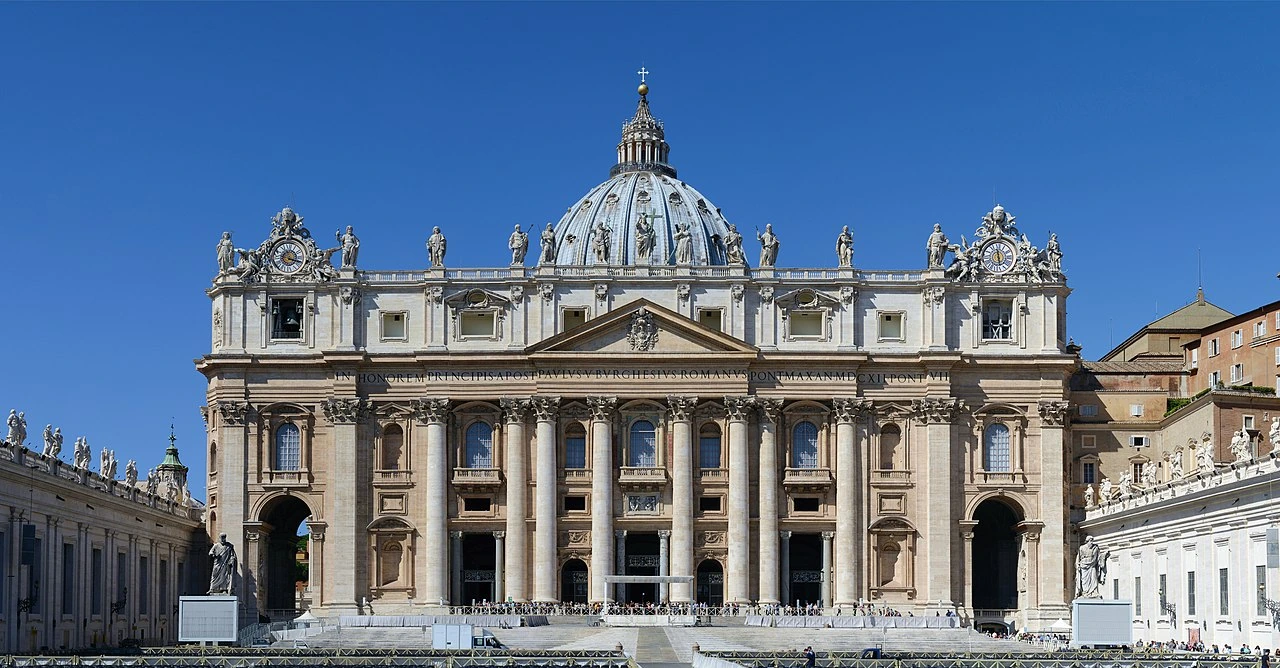
Quick answer: what is the Pope's net worth right now?
The short answer is: there is no authoritative, methodology-backed net worth figure for the current Pope as of April 2026. The most widely circulated number you will find online for Pope Francis is either $100 (the figure used by CelebrityNetWorth, framed as an estimate of his personal assets at the time of his death) or roughly $16 million (a figure that spread through secondary outlets and appears to originate from a Marca report). Those two numbers are so far apart that they are essentially measuring different things, and neither comes from a Vatican-published balance sheet or a Forbes-style audited methodology. For the current officeholder, Pope Leo's net worth is the most relevant figure to look up, and any estimate should be treated as a rough approximation rather than a verified asset total.
If you want the most honest range: the Pope's personal net worth, in the traditional celebrity sense, is effectively near zero. As head of the Holy See, the Pope does not personally own the Vatican's properties, artwork, or investment portfolios. What some sites label as "the Pope's net worth" is really a proxy for institutional resources the office can access, not a personal balance sheet. Keep that distinction in mind as you read any figure you find online.
Which "Pope" are you actually searching for?
This matters more than it sounds. The Pope is a current officeholder, not a fixed individual, which means "pope net worth" queries can refer to entirely different people depending on when you search. As of April 17, 2026, Pope Leo XIV is the current Pope. Pope Francis died earlier in 2026, so searches for "pope net worth" or "new pope net worth" now point to Leo XIV, but a lot of the content indexed online still discusses Francis. If you land on a page that quotes a net worth figure without naming the specific individual, you may be reading about the wrong person entirely.
For historical reference, Pope Benedict's net worth was also widely discussed during his papacy and after his resignation in 2013, and the same institutional-vs-personal ambiguity applied to him. Every pope operates under essentially the same financial structure, so the underlying methodology question stays the same across officeholders even as the individual changes.
When a papal transition happens, net worth databases typically lag by weeks or months before a new profile appears. During that window, some sites will still show outdated figures for the previous pope under a generic "pope net worth" page title. The safest approach: always confirm the page names the specific pope you are researching before trusting the number. For a closer look at what was reported when Francis passed, the Pope's net worth at the time of his death is worth reading alongside any current estimate.
Why calculating the Pope's net worth is genuinely complicated
The core problem is that the Vatican's financial structure is unlike any other public figure's. Under reforms carried out during the Francis era, Vatican departments' assets were explicitly classified as "sovereign patrimony owned by the Holy See and not any individual or office." That legal framing means the Pope does not personally own the Sistine Chapel, Vatican real estate, or the investment portfolio managed by APSA (the Administration of the Patrimony of the Apostolic See). He lives in a Vatican residence and uses institutional resources, but none of that converts into a personal asset he could liquidate.
The Holy See's revenue comes from donations (including Peter's Pence), profits from Vatican Museums, real estate income, stamps, publications, and investment returns. AP reporting on Vatican finances describes these as institutional revenues allocated to operating costs, deficits, and pension obligations. As of the mid-2020s, the Vatican was working to close a deficit in the range of $57 to $68 million, which is a sign that this is not a wealthy entity in the conventional sense, let alone one generating personal income for its leader. None of that institutional accounting translates directly into a personal net worth number for whoever sits in the chair.
Pope Leo XIV has continued reshaping the Vatican's financial governance structure, including revising specific financial management laws put in place by his predecessor. Those institutional shifts can cause net worth estimates to swing in media coverage without any actual change in the Pope's personal financial position. Understanding that is key to not being misled by a headline that says "pope's net worth drops" or "rises" after a policy announcement.
How net worth estimates for the Pope actually get built

For most public figures, net worth estimates follow a recognizable pattern: you add up known assets (real estate, equity stakes, cash, investments), subtract known liabilities, and apply valuation multiples where needed, using SEC filings, property records, and company disclosures as anchors. Forbes' methodology for the Forbes 400, for example, explicitly ties estimates to dated snapshots and uses revenue/profit multiples with a liquidity discount for private assets. That kind of structured, sourced approach produces a defensible range even when the exact number is uncertain.
For the Pope, none of those anchors are available in the same way. There are no SEC filings, no property records in the Pope's personal name, and no salary disclosure. What sites like CelebrityNetWorth do instead is aggregate publicly available information through what they describe as a proprietary algorithm. Wikipedia's overview of CelebrityNetWorth notes the site has been criticized for a lack of transparency and verification. That is not a reason to dismiss every figure entirely, but it is a reason to treat the output as a rough signal rather than a reliable estimate. The $100 figure for Francis, for instance, appears to reflect the view that he personally owned almost nothing, which is actually consistent with how papal finances work. The $16 million figure from secondary outlets likely conflates Vatican-provided resources with personal ownership.
| Source type | Typical figure cited | What it actually measures | Reliability for personal net worth |
|---|
| CelebrityNetWorth (Francis) | $100 | Estimated personal assets at death | Low transparency, but directionally plausible given vow of simplicity |
| Secondary outlets (e.g., Marca-sourced) | ~$16 million | Institutional resources attributed to the office | Conflates personal and institutional assets |
| AP / Reuters Vatican coverage | No personal figure given | Institutional revenues, deficits, and budgets | Accurate for institutions, not useful as personal net worth |
| Vatican Economy Ministry / Council for the Economy | No personal figure given | Official financial statements for Holy See entities | Most reliable for institutional context, not personal wealth |
If you searched "Generoso Pope" or "Che Pope" net worth, here is what you actually want
These two search variants come up often enough to be worth addressing directly. "Generoso Pope" does not refer to a Catholic pope named Generoso. Generoso Pope was an Italian-American businessman and newspaper publisher, and Generoso Pope Jr. (1927-1988) was the media mogul who built The National Enquirer into a major tabloid. The LA Times described him as a "Millionaire Owner of National Enquirer." If you are looking for that person's net worth, you want a search specifically for Generoso Pope Jr., not the Catholic papacy. The surname "Pope" is causing the conflation.
"Che Pope" is a different kind of mix-up. There is no pope named Che. The most likely explanation for this search is that someone encountered the Italian TV program "Che Tempo Che Fa," on which Pope Francis appeared, and the phrase "Che" got associated with the Pope in indexing or memory. Alternatively, some readers may be searching for Che Guevara's net worth and the word "pope" is entering the query by mistake. CelebrityNetWorth does maintain a Che Guevara profile if that is what you are after. In either case, there is no Catholic officeholder whose name is Che, so redirecting to the correct individual's profile is the right move.
How to find and verify the best current estimate on a net worth database

When you use a net worth reference database to look up the Pope, the goal is to get the most current, most specific estimate while understanding what it actually covers. Here is the practical process I would use:
- Search by the specific pope's name, not just "pope net worth." As of April 2026, that means searching for Pope Leo XIV. Generic searches will surface outdated Francis pages.
- Check the page's last-updated timestamp. Net worth databases update profiles at different intervals. A page last updated in 2024 is not going to reflect Leo XIV's situation.
- Read the methodology note or disclaimer on the site. If the site does not explain how it calculated the figure, treat the number with extra skepticism. A site that acknowledges its figures are estimates drawn from public sources is being more honest than one that presents a number as fact.
- Cross-check with Vatican institutional reporting. AP, Reuters, and Vatican Economy Ministry statements will not give you a personal net worth, but they will tell you about revenues, deficits, and asset structures that should inform whether a cited figure is plausible.
- Distinguish personal assets from institutional access. Any figure above a few hundred dollars almost certainly includes resources the Pope uses but does not own. Ask whether the site explains that distinction.
Vatican financial statements are published by multiple agencies, including APSA and IOR (the Vatican Bank), but assembling a clear overall picture from those documents is genuinely difficult, as financial analysts covering the Holy See have noted. That opacity is not a cover-up, it is just a consequence of a complex, multi-agency institution that was not designed around the kind of transparency modern investors or journalists expect. Use the institutional reports as a reality check on viral numbers, not as a substitute for a personal net worth estimate.
For the most grounded comparison of what papal wealth narratives have looked like across different officeholders and time periods, the net worth at the time of death for figures like Louis Prima illustrates how these snapshot estimates work for public figures generally: they capture a moment in time, they depend on available public information, and they require the reader to understand what the site is and is not counting. The Pope is a more extreme version of that challenge, but the same interpretive discipline applies.
The bottom line on pope's net worth
If you need a single number to work with: the Pope's personal net worth is effectively near $0 to $100, based on the most defensible interpretation of personal asset ownership. The institutional resources of the Holy See are vast and complex, but they do not belong to the Pope personally. Any figure significantly above that range is measuring something else, usually the estimated value of Vatican-provided resources, and should be labeled as such. Treat every online estimate as a starting point for understanding, not a definitive answer, and always check whether the page names the current officeholder before using the figure.