
The most cited estimate for a pope's net worth at time of death depends almost entirely on which pope you mean. For Pope Francis, who died on April 21, 2025, Celebrity Net Worth pegs his personal net worth at death at roughly $100, while other outlets claim figures as high as $16 million. For Pope Benedict XVI, who died in December 2022, estimates land around $2.5 million. For Pope John Paul II, who died April 2, 2005, net worth database pages exist but figures vary widely. The reason for these dramatic differences is not sloppy research alone: it comes down to a genuinely hard question about what counts as a pope's personal wealth versus the institutional patrimony of the Vatican.
Pope Net Worth at Time of Death: How to Find the Estimate

Marcus Kellerman
21 May 2026

Which Pope are we actually talking about?

The keyword 'pope net worth at death' is genuinely ambiguous. When this phrase spiked in search traffic in April 2025, it was almost certainly about Pope Francis (Jorge Mario Bergoglio), who passed away on April 21, 2025, making him the most recent pope to die. Before that wave, the same phrase often pointed to Pope John Paul II (died April 2, 2005), who remains one of the most searched papal figures on net worth databases. Pope Benedict XVI (died December 31, 2022) also has his own dedicated pages on entertainment-focused net worth sites, with estimates around $2.5 million.
There is also a non-religious possibility worth flagging: 'Pope' is a nickname used by some public figures in entertainment and sports. If you landed here looking for someone nicknamed Pope rather than a head of the Catholic Church, the entries below on Pope Leo XIV (elected May 2025 and currently living, so not relevant here) and Pope Benedict are the closest sibling topics in this database. For everyone else, this article focuses on the papal office and its unique wealth-attribution challenges.
What 'net worth at time of death' actually means
Net worth at time of death is, in theory, a snapshot valuation: total assets minus total liabilities on the date the person died. For most public figures, that includes cash and bank balances, real estate holdings, investment portfolios, business equity, intellectual property royalties, and any outstanding debts. It is different from 'peak net worth' (the highest the estimate ever reached during their lifetime) and from 'current net worth' (a living person's present-day estimate). The date-of-death figure matters for estate and probate purposes, and it is the number that headlines tend to run with because it feels final and concrete.
In practice, for most celebrities and public figures, the date-of-death figure on net worth sites is not a forensic accounting of the estate. It is an estimate, the same estimate the site has been running, sometimes updated slightly around the time of death to account for any final known transactions or disclosed holdings. Treat it as an informed approximation, not a legal valuation.
Why papal net worth estimates are especially tricky to derive

Here is the core problem: the Catholic Church's own canon law explicitly states that goods acquired by curial institutions and entities connected to the Holy See are ecclesiastical public goods owned by the Holy See as a whole, belonging to its unitary, indivisible patrimony. Canons 1254 through 1258 of the Code of Canon Law lay out the legal framework: Church temporal goods serve institutional purposes, not private individuals. That means the Vatican Museums, St. Peter's Basilica, the Vatican's art collections, its real estate in Rome, and its financial holdings are not the pope's personal property, legally or canonically. They never pass to the pope's estate.
This distinction is what drives the enormous spread in estimates. Some net worth sites look at the Vatican's total institutional wealth (art collections alone are estimated in the hundreds of billions of dollars) and implicitly treat the pope as a 'controller' of those assets, producing inflated numbers. Others take a strict personal-assets-only approach, arriving at something close to zero or a symbolic figure. The $100 figure for Pope Francis from Celebrity Net Worth reflects the latter logic: as someone who famously lived austerely, declined a papal apartment, and reportedly held almost no personal financial assets, his strictly personal estate at death was essentially nothing beyond what was in his personal possession. Because of those same wealth-attribution issues, estimates for Louis Prima's net worth at death can also vary widely depending on what assets are counted as truly personal louis prima net worth at death.
The $16 million figure circulating in tabloid coverage of Pope Francis's death traces back to secondary outlets amplifying each other, not to a primary verified source. Cross-referencing those claims back to their origins reveals they rely on assumptions about what the pope 'had access to' rather than what he personally owned. That is a methodological error that inflates the number significantly.
How to find the right entry in a net worth reference database
When using a net worth database to look up a papal figure, search by full name rather than title. 'Pope Francis' will usually get you there, but 'Jorge Mario Bergoglio' may surface a more accurate, less sensationalized entry on sites that distinguish between the institutional title and the individual. Similarly, search 'Karol Wojtyla' for Pope John Paul II or 'Joseph Aloisius Ratzinger' for Pope Benedict XVI. This helps filter out entries that conflate Vatican institutional wealth with personal net worth.
Once you find the entry, look for these signals of a more reliable estimate: a clear methodology note explaining what assets are included, an acknowledgment of the Vatican patrimony distinction, a date attached to the figure (so you know if it was updated at or near the time of death), and a confidence or speculative disclaimer. If you specifically want to compare reported figures, searching for the pope's net worth claims alongside the methodology used can clarify which number is most credible pope's net worth at death. Entries that cite only a single round number without any of these markers should be treated with skepticism.
What actually drives the estimate at death

For a pope specifically, the legitimate personal wealth components are narrow. Here is what responsible estimators actually look at:
- Pre-papal career earnings: income from employment, teaching, or church roles before becoming pope, which may have built modest personal savings or assets
- Book royalties and intellectual property: popes who authored books (John Paul II was a prolific writer, and Benedict XVI wrote extensively) may have accrued royalties that were partly personal
- Personal gifts: gifts received in a personal capacity rather than on behalf of the Church, though canon law and custom mean most gifts given to the pope are treated as institutional
- Personal bank accounts: any funds held in a personal rather than institutional account at time of death
- Pre-existing personal property: real estate or assets owned before taking the papacy, though most are typically transferred or surrendered upon elevation to the office
- Liabilities: any personal debts, which for popes are typically minimal or nonexistent given the Church covers living expenses
The Vatican pays no salary to the pope. Living expenses, travel, security, and residence are all covered institutionally. This means there is no salary accumulation to count, no investment portfolio built from earnings, and no pension in the traditional sense. The result is that a pope's strictly personal net worth at death is almost always near zero, which is exactly what the $100 figure for Pope Francis is trying to capture.
How to interpret the number: inflation, currency, and source gaps
If you are looking at Pope John Paul II's net worth at death (April 2, 2005), any figure in U.S. dollars from that period needs an inflation adjustment to mean anything in 2026 terms. The cumulative inflation since 2005 is roughly 50 to 60 percent, so a $1 million figure from 2005 would be equivalent to about $1.5 to $1.6 million today. Some net worth databases do not adjust for inflation at all, which means older figures look smaller than they actually were in real terms.
Currency matters too. Some European sources quote figures in euros, and the euro-dollar exchange rate has moved substantially over the past two decades. A figure cited in euros from 2005 or 2022 will differ from a dollar conversion today simply because of exchange rate movement, not because the underlying estimate changed.
Source discrepancies are probably the biggest practical issue. The $100 figure for Pope Francis, the $16 million figure, and other numbers in between are all floating around online simultaneously. This is common for high-profile deaths where multiple outlets rush to publish. The $100 figure from Celebrity Net Worth is the most conservative and arguably the most defensible given what we know about Francis's personal austerity. The higher figures typically come from secondary sources that did not do original research, just aggregated or misread other estimates.
| Pope | Death Date | Estimated Net Worth at Death | Primary Source | Key Caveat |
|---|---|---|---|---|
| Pope Francis | April 21, 2025 | ~$100 (personal) | Celebrity Net Worth | Reflects strict personal assets only; $16M figure from tabloid sources lacks primary sourcing |
| Pope Benedict XVI | December 31, 2022 | ~$2.5 million | ABTC / entertainment net worth sites | Includes book royalties and pre-papal assets; methodology varies by source |
| Pope John Paul II | April 2, 2005 | Varies widely by source | NetWorthList and similar databases | 2005 dollars; no single authoritative figure; book royalties were significant |
Practical next steps to verify and assess confidence
Here is how to approach this research practically, whether you want a quick number or want to understand the methodology behind it.
- Identify which pope you mean and search by birth name, not just 'Pope': Jorge Mario Bergoglio for Francis, Karol Wojtyla for John Paul II, Joseph Ratzinger for Benedict XVI
- Check at least two net worth database entries and note whether their figures align: if one says $100 and another says $16 million, the spread itself tells you something about methodology reliability
- Look for the asset breakdown: a credible entry will distinguish personal assets (book royalties, pre-papal savings) from Vatican institutional holdings; if no breakdown is given, treat the number as low confidence
- Apply the Vatican patrimony filter: mentally subtract anything that is a Vatican institutional asset (buildings, art, investments held by the Holy See) from whatever figure you see cited
- Adjust for inflation if the death date is more than a few years ago: the BLS inflation calculator is a free tool for U.S. dollar adjustments; for euro-denominated figures, factor in exchange rate movement
- Check the publication date of the estimate: figures published at or very close to the time of death are more likely to be updated than evergreen pages that have not been touched in years
- Assign a confidence level: for Pope Francis, the $100 personal figure is medium-high confidence based on what is publicly known about his lifestyle; the $16M figure is low confidence without a verified primary source
One more useful comparison: looking at how net worth at death is handled for other public figures with unusual wealth structures, like musicians or entertainers with complex estates, gives you a sense of how much these estimates can swing based on methodology. The principles here apply broadly to any historical or recently deceased public figure in a net worth database, not just popes.
The bottom line is that the most defensible figure for Pope Francis's net worth at death is very close to zero in personal terms, symbolized by the $100 estimate. If you are specifically researching Pope Leo's net worth, look for an entry that separates any personal assets from Vatican institutional wealth Pope Francis's net worth at death. For popes with more significant pre-papal careers and publishing output, like Benedict XVI, a low-single-digit million figure is reasonable. For John Paul II, book royalties and a longer pre-papal career in communist Poland make personal wealth estimation even harder, and no single authoritative figure exists. Whatever number you land on, pair it with a clear understanding of what that number does and does not include, and you will be far ahead of most readers who take the headline figure at face value.
FAQ
Why do “pope net worth at time of death” numbers vary so wildly between sites?
Because most sites do not agree on what they are valuing. Some implicitly count Vatican patrimony as if it were personal property, while others focus only on what could reasonably be in the pope’s own possession. The legal point that Vatican goods belong to the Holy See as an institution makes “personal net worth” a much narrower, often near-zero concept than “wealth associated with the office.”
Do any net worth sites treat the pope like they do a typical celebrity with a salary and investments?
Some do, indirectly. If an estimator assumes the pope accrued wealth the way a salaried executive would, the result can be inflated. The more defensible approach is to look for methodology that explicitly separates institutional funding (residence, security, travel) from personal assets, and avoids attributing art collections or museum holdings to the pope’s estate.
What exactly should you count as “personal” when you see a pope’s net worth at death?
Look for items that plausibly remained under the individual’s control, such as personal bank accounts, cash on hand, and any clearly private holdings. Also check whether the site includes or excludes income streams like book royalties or speaking fees earned before the papacy, since those can affect the personal-estate portion for popes with major pre-papal careers.
If a pope lived very austerely, can the personal net worth still be non-zero?
Yes. “Near zero” does not always mean literally no assets. A pope could have modest personal savings, small amounts of cash, or personal items with value. Net worth sites often convert sparse public information into a symbolic figure, so you should check whether the entry explains the cutoff for “included assets” and whether it acknowledges limited evidence.
How should I compare numbers reported in different currencies (USD vs EUR)?
You should compare using consistent assumptions. If a site reports in euros for a year like 2005 or 2022, convert at the relevant exchange rate used by the site or redo the conversion yourself. Also check whether the site already converted to today’s money, because double conversion can create misleading differences.
How do I adjust an older “net worth at death” figure for inflation, especially for John Paul II?
Find the year the estimate refers to and then apply inflation to translate it into today’s dollars. Many net worth databases do not adjust automatically, so a figure that looks small might only be “small” because it is not inflation-adjusted. If the site offers a “current value” or “updated to present” note, follow that only if the methodology is transparent.
Do “date of death” estimates mean the number was finalized on that exact day?
Not usually. Most entries are estimates that may be updated around the time of death when new claims circulate, rather than a forensic accounting completed immediately. A responsible entry typically shows a date for when the estimate was last updated, and it may include a disclaimer that the value is based on incomplete or indirect information.
What search strategy avoids mixing up “Pope” as a nickname with a pope of the Catholic Church?
Use the pope’s full name rather than the title. For example, search “Jorge Mario Bergoglio” or “Karol Wojtyla” instead of “Pope Francis” or “Pope John Paul II.” This reduces the chance that your results include unrelated entertainment figures who happen to use “Pope” as a stage name.
How can I tell if a high number is methodologically weak?
Treat figures as suspicious if they lack a methodology note, do not clarify whether Vatican patrimony is excluded, and present only a single rounded number without assumptions. Also be wary if the number traces back to tabloid amplification without showing the underlying calculation steps or source logic.
For popes with big publishing output, will book royalties affect personal net worth at death?
They can, depending on the estimator’s scope. If a pope earned royalties before becoming pope, those earnings may be treated as part of personal wealth, even though Vatican institutional income is not personal property. Check whether the site distinguishes pre-papal earnings and controlled assets from institutional funding.
Is there a best practice for deciding which “pope net worth at time of death” number to trust?
Choose the entry that most clearly separates personal assets from Holy See institutional patrimony, includes a date and an explicit methodology or assumptions section, and avoids implying control over museum and basilica assets. If two sites disagree sharply, the one that documents inclusions and exclusions is usually more defensible than the one that only gives a headline number.
Next Articles

Louis Prima Net Worth at Death: What He Was Worth
Louis Prima net worth at death: how to verify estate value, why estimates differ, and where to find records.
Pope Benedict Net Worth: Estimated Range and What’s Speculative
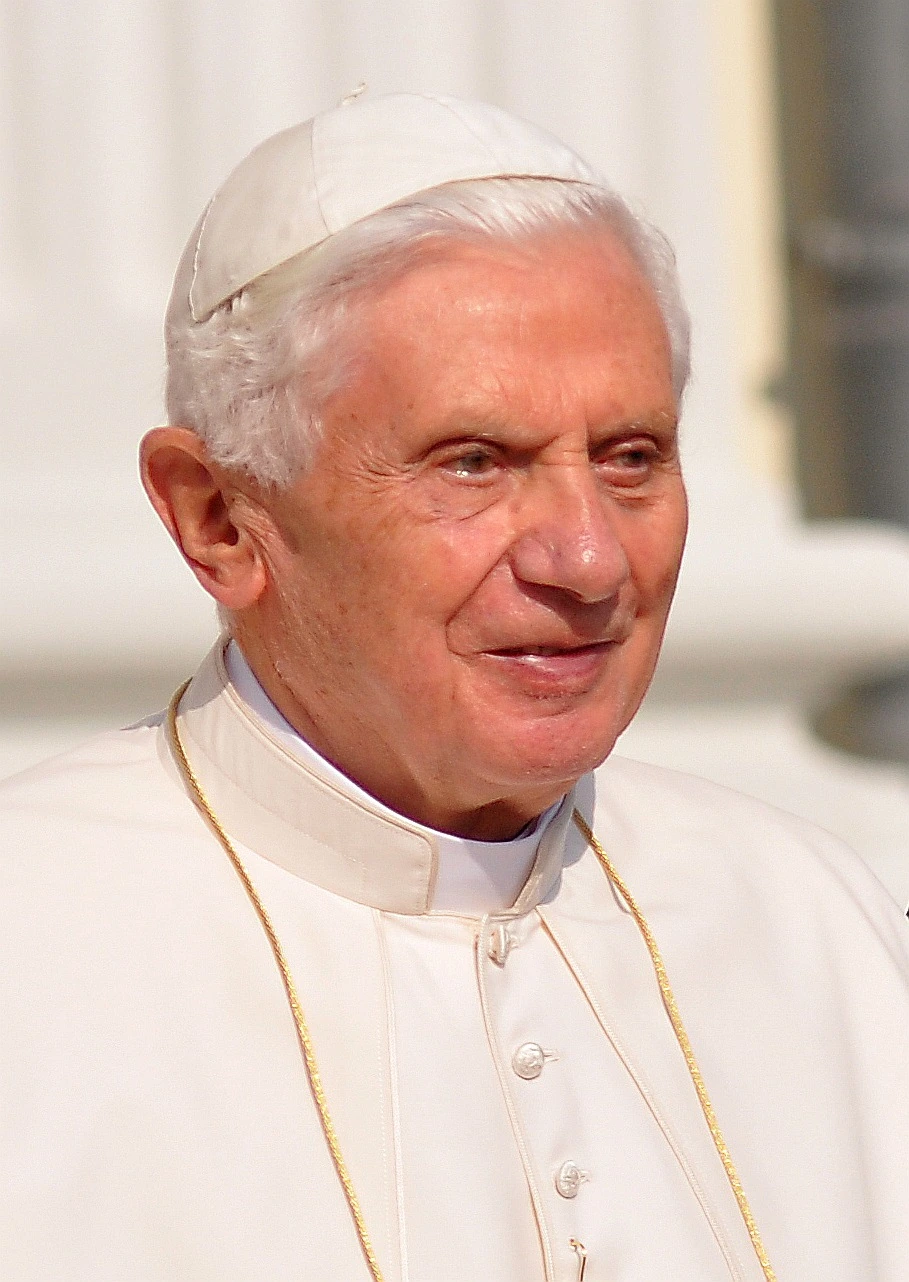
Pope Benedict XVI net worth estimate with clear caveats, explains why it’s speculative and how net-worth sites calculate
Pope Leo Net Worth: Best Estimates for Each Pope
Estimated net worth for Pope Leo X and Pope Leo XIII, how figures are calculated, and why sources differ