
Pope Benedict XVI's net worth at the time of his death in December 2022 is most credibly estimated in a modest range, likely somewhere between $100,000 and $500,000 in personally held assets, if that. That number will feel surprisingly low compared to what you see on some net-worth aggregator sites, and the gap deserves an explanation. Benedict was not a celebrity with a salary, investment portfolio, or real estate holdings in the conventional sense.
Pope Benedict Net Worth: Estimated Range and What’s Speculative

Marcus Kellerman
22 Apr 2026
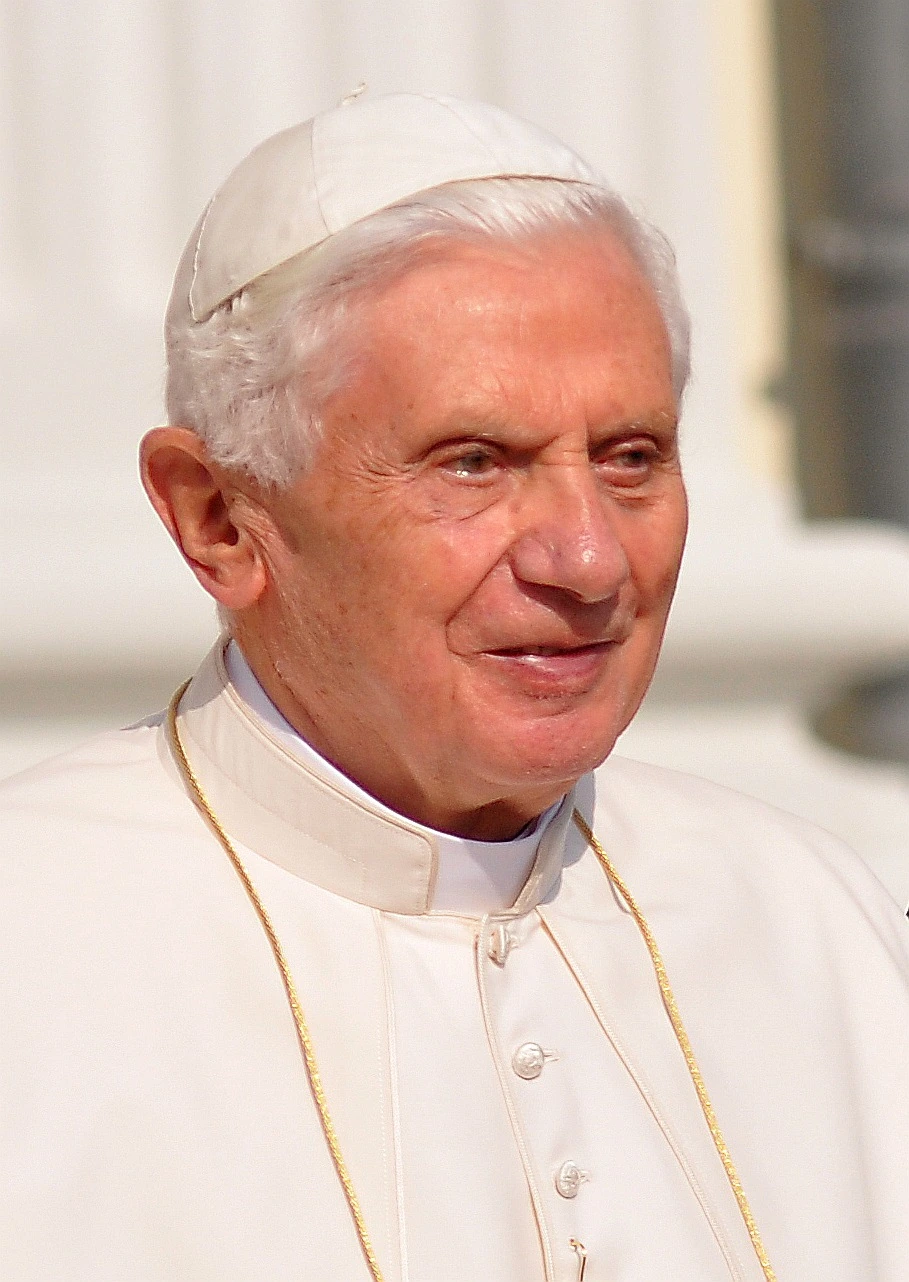
Almost everything that supported his daily life, from housing to security to healthcare, was provided directly by the Vatican as an institution. Personal wealth, in the way most net-worth tools calculate it, simply does not map well onto a religious leader who spent his adult life inside one of the world's most unique institutional structures. Treat any specific number you find online as a rough, speculative estimate rather than a verified figure.
Who Pope Benedict XVI actually was and how he was financially supported
Joseph Aloisius Ratzinger was born in Bavaria in 1927 and was ordained a priest in 1951. He rose through the German Catholic hierarchy as a theologian and academic before being appointed Archbishop of Munich and Freising in 1977, then a Cardinal. From 1981 onward he served as Prefect of the Congregation for the Doctrine of the Faith in Rome, a senior Vatican role, before being elected pope in April 2005 following the death of John Paul II. He served as pope until February 2013, when he became the first pope to resign in nearly 600 years. He then lived in the Mater Ecclesiae monastery on Vatican grounds until his death on December 31, 2022, at age 95.
Throughout that entire arc, his income was never a salary in the commercial sense. As a diocesan cleric, then as a Vatican official, and then as pope, his material needs were met institutionally. After his resignation, multiple news outlets reported that he would receive a pension or monthly stipend in the range of roughly [€2,500 to the equivalent of about $3,300](https://www. epochtimes.
com/b5/13/2/18/n3803454. htm) per month, depending on the source and the exchange rate at the time. The Vatican also continued to provide his housing at the monastery, a small personal staff, and all normal living expenses. He did not pay rent, utilities, or security costs out of pocket.
So the monthly pension amount, while modest, effectively overstates his personal outgoings, because his cost of living was near zero.
There were a few other financial threads worth noting. His brother, Georg Ratzinger, a priest and conductor of the Regensburg boys' choir who died in 2020, left an inheritance. Reports from Rome Reports indicated that Benedict XVI chose to renounce that inheritance and directed it toward the Holy See rather than retaining it personally.
Later, in 2023, reporting from Religion News Service revealed that Benedict's executor had to contact distant cousins under German estate law regarding a small inheritance, and the Catholic Herald reported that the archbishop serving as executor explicitly clarified the estate did not include payments or royalties from Benedict's published writings. That clarification matters because Benedict was a prolific author and theologian, and book royalties were one area where personal income could theoretically have accumulated.
How net-worth sites come up with their numbers
Most net-worth aggregator sites use a combination of publicly available signals to build an estimate for any public figure: reported salaries or earnings, known real estate transactions, income from media or business ventures, publicly filed documents, and interview disclosures. For celebrities, athletes, or business executives, that data pool can be reasonably rich. SEC filings show stock compensation. County assessor records show property values. Contracts get leaked or reported. For a pope, almost none of those data inputs exist in the normal form.
What aggregators typically do in cases like Benedict's is anchor an estimate around the reported pension figure, add a rough guess at book royalties from his published works (his 'Jesus of Nazareth' trilogy alone sold millions of copies), and potentially factor in any reported personal assets. The resulting number is largely constructed rather than derived from hard financial data. There is no publicly available tax return, no asset disclosure, no brokerage account filing, and no real estate deed tied to Benedict personally. The Vatican's finances are their own separate matter entirely and do not belong in any individual pope's personal net worth calculation.
What the internet claims versus what can actually be verified

You will find sites claiming Pope Benedict XVI had a net worth of anywhere from $1 million to $500 million. If you are tempted to compare that viral claim to other papal wealth articles like pope leo net worth, remember that these estimates often blend personal assets with institutional Vatican holdings.
If you want another example of how end-of-life wealth claims can vary widely, compare this to louis prima net worth at death and how those numbers are framed. The high-end figures almost always conflate the Vatican's institutional wealth, which is genuinely vast and includes art, real estate, and financial assets held by the Holy See, with the personal wealth of the individual who led it. That is a fundamental error. The Vatican is a sovereign institution.
Its assets are not Benedict's personal property any more than the Pentagon budget belongs to a Secretary of Defense personally. Attributing Vatican institutional wealth to a pope's net worth is like attributing a country's GDP to its head of state.
The more credible and verifiable data points are the pension figure (roughly €2,500 per month as reported by The Independent at the time of his resignation), the institutional housing and support arrangement confirmed by Vatican spokesman Father Federico Lombardi, and the estate disclosures after his 2022 death that described a modest personal inheritance situation involving distant cousins. Nothing in the verified public record supports a multi-million dollar personal fortune. That does not mean he had zero, but the honest answer is that credible evidence supports only a modest personal estate. If you are also comparing how different popes' wealth gets discussed at the end of life, see the related guide on pope net worth at time of death.
| Claim Type | What It Says | How Credible |
|---|---|---|
| High-end internet estimates | $100M–$500M personal net worth | Very low — conflates Vatican institutional assets with personal wealth |
| Mid-range aggregator estimates | $5M–$20M | Low — likely inflates royalties and applies celebrity income models incorrectly |
| Pension-based estimates | ~$100K–$500K in accumulated personal assets | Moderate — anchored in verified pension and estate reporting |
| Vatican wealth attribution | Billions in Church art, real estate, finance | Not applicable to personal net worth — these are institutional assets |
Factors that shift the estimate depending on which period you're looking at
Timing matters when assessing any public figure's net worth, and Benedict's financial picture changed significantly across different phases of his life. During his years as a Vatican official (1981 to 2005), he would have had a modest clerical stipend and institutional support. As pope (2005 to 2013), there is no personal salary attached to the role at all in a traditional sense, though all expenses are covered. After his resignation in 2013, the monthly pension in the €2,500 range became relevant, but he was also no longer carrying any significant personal expenses given the Vatican's ongoing material support.
Book royalties are the one variable that could have added meaningful personal income over time. Benedict published extensively, both before and during his papacy, under his own name and as Joseph Ratzinger. However, per executor communications reported after his death, those royalties were explicitly stated to not be part of the estate that would pass to heirs. Whether that means they were donated, directed to Church accounts, or had simply not accumulated as private wealth is unclear. What is clear is that the executor's statement removes them from the verified personal estate calculation.
The renunciation of his brother Georg's inheritance in 2020 is another significant factor. Choosing to redirect that inheritance to the Holy See rather than retain it personally kept his individual estate smaller than it might otherwise have been. The 2023 estate reporting about cousins being contacted under German inheritance law suggests the remaining personal estate was small enough that the process was notable more for its legal formality than for any significant sums involved.
- Pre-papal career (priest, archbishop, cardinal): very modest personal income, institutional support throughout
- As pope (2005–2013): no personal salary; all expenses covered by the Vatican
- Post-resignation (2013–2022): pension of approximately €2,500/month; housing and expenses still covered by the Vatican
- Book royalties: published widely, but executor confirmed royalties were not part of the personal estate passed to heirs
- Georg Ratzinger inheritance (2020): renounced and redirected to the Holy See
- Personal estate at death: described in reporting as modest; involved distant cousins under German law
How to find better references and validate any estimate you see

If you want to stress-test a net-worth figure you found somewhere, the first thing to do is check whether the site provides any sourcing at all. Unsourced lump-sum numbers for religious figures should be treated with heavy skepticism. For Benedict specifically, the most reliable anchors are the contemporaneous news reporting from February and March 2013 around his resignation, which included direct reporting on the pension arrangement from outlets like The Independent and TIME, and the 2023 estate reporting from Religion News Service and Catholic Herald following his death. Those are checkable, named sources with direct quotes from officials like Father Federico Lombardi and the archbishop serving as executor.
From there, you can work forward: if he received roughly €2,500 per month for about 9 years (early 2013 through late 2022), and had essentially zero personal living expenses, the theoretical accumulated pension would be roughly €270,000 over that period, assuming nothing was donated or redirected. That is a ceiling built on the pension data alone, and it aligns with the lower end of credible estimates. Any site claiming millions in personal net worth would need to document specific assets, income streams, or holdings to justify the higher figure, and no such documentation appears in the public record.
It is also worth understanding the broader context of how papal and Vatican wealth works, which connects to questions that come up around the general pope's net worth, the historical wealth of specific popes, and how the Vatican's finances relate to individual leaders. Those are genuinely separate questions from what Benedict personally owned, and keeping them separate is the key to reading any estimate accurately. Net-worth figures for popes are always going to be estimates built on incomplete information. The honest, data-grounded approach is to present a modest range, note the structural reasons why the number is unknowable with precision, and avoid inflating it with institutional wealth that never belonged to the individual in the first place.
If you want to dig further, the most productive search terms are specific: look for reporting on 'Pope Benedict XVI pension 2013,' 'Benedict XVI estate 2023,' and 'Georg Ratzinger inheritance Benedict renounce.' Those searches will surface the primary reporting that forms the actual factual foundation for any reasonable estimate, and they will quickly help you identify which net-worth sites are working from real data versus which ones are simply repeating numbers that were invented and then passed around.
FAQ
Why do net-worth sites claim Pope Benedict net worth is in the millions or higher when the pension was so low?
Most high figures are not describing Benedict’s personal wealth alone. They often blend personal items with Vatican institutional wealth, or they “add” assumed book royalties and asset holdings without documentation. If a site cannot point to specific personally held assets (bank accounts, property deeds, disclosed investments), treat the higher range as effectively invented.
Does the resignation pension mean he personally earned about that amount in profit every month?
Not exactly. The reported monthly pension is better thought of as the money available to cover his needs, while many day-to-day costs (housing, security, healthcare, staff support) were provided institutionally. That means a pension-based back-of-the-envelope calculation can overstate personal outgoings, and it also does not prove that he saved most of the pension.
Were Benedict’s book royalties paid to him personally, and did they increase his estate?
The article notes that the executor clarified that royalties were not included as part of what would pass to heirs. That does not automatically tell you whether royalties were donated, reassigned, or never accrued as private wealth, but it does mean you cannot reliably count them as increasing his personal net worth at death.
If Benedict lived rent-free in the monastery, how should I interpret a “net worth at death” estimate?
For a leader whose housing and operations were largely institutionally covered, net worth tools that assume living expenses and private asset accumulation are a poor fit. A more realistic approach is to focus on identifiable personal wealth signals discussed in estate reporting, rather than treating his years of service like an executive compensation track.
Did Benedict own any Vatican property or artwork that would count as his personal assets?
The article emphasizes that Vatican assets are separate from personal property. Even if he had access to items or lived within Vatican premises, that generally does not translate into personal ownership. If a source claims he “owned” major Vatican holdings, that is usually a category error (institutional assets vs individual estate).
How can I tell whether a Pope Benedict net worth number is mixing up institutional wealth with personal wealth?
Check whether the site uses phrases like “Vatican wealth,” “Holy See assets,” “papal holdings,” or “assets of the Church” while presenting one combined total. Reliable estimates should clearly distinguish his pension and any personally held estate from assets legally belonging to the Vatican as a sovereign entity.
Could his net worth have been higher than the lower range without contradicting the evidence in the article?
Yes. The article says credible evidence supports a modest personal estate, but it also notes that detailed personal financial disclosures are not available. He could have had small personal savings, personal effects, or minor assets that are not visible in public records, yet still be far from multi-million claims.
What’s the most common mistake when someone tries to compare Pope Benedict net worth to other “pope net worth” articles?
Comparing totals that are not computed the same way. One article may inflate by including Vatican holdings, another may assume royalties, and another may use a completely unsourced number. Without consistent methodology and sourcing, comparisons can be misleading even when both numbers “sound” specific.
How should I calculate a maximum personal “pension-only” ceiling from the €2,500 per month figure mentioned?
Use it as an upper bound, not a net accumulation guarantee. The article gives a rough accumulation ceiling by multiplying time by the monthly amount, but real savings could be lower due to donations, redirected inheritances, or other personal financial decisions, and you still would not account for any non-pension assets that might not be documented.
What search terms or checks best reveal whether an estimate is based on real reporting?
Look for primary anchor terms tied to verifiable events: “Benedict XVI pension 2013,” “Benedict XVI resignation pension arrangement,” “Benedict XVI estate 2023 executor,” and “Georg Ratzinger inheritance renounce Holy See.” Then verify whether the source cites named officials and specific statements, not just a standalone “net worth at death” claim.
Next Articles
Pope Leo Net Worth: Best Estimates for Each Pope
Estimated net worth for Pope Leo X and Pope Leo XIII, how figures are calculated, and why sources differ
Pope’s Net Worth: Estimate, Sources, and How to Verify
Estimated pope’s net worth, how estimates work, how to verify for the new pope, plus Generoso and Che query fixes.

Ava Frati Net Worth Estimate: Range, Income Sources, and How to Verify
Ava Frati net worth range estimate, income sources, and a checklist to verify net-worth claims reliably.