
The most likely person you are searching for when you type 'Duchess of Medinaceli net worth' is either Victoria Eugenia Fernández de Córdoba y Fernández de Henestrosa, who held the title until her death in 2013 and whose estate sparked years of high-profile litigation, or Victoria Elisabeth von und zu Hohenlohe-Langenburg, born in 1997 and recognized as the modern current holder of the title. The estate linked to the Medinaceli ducal house has been publicly valued at roughly 110 million euros in heritage assets, though a precise personal net worth figure for any living title holder is genuinely difficult to pin down given how the wealth is structured through a foundation rather than personal ownership.
Duchess of Medinaceli Net Worth: Estimates, Sources, How to Verify

Marcus Kellerman
18 May 2026

Which Duchess of Medinaceli Are We Talking About?
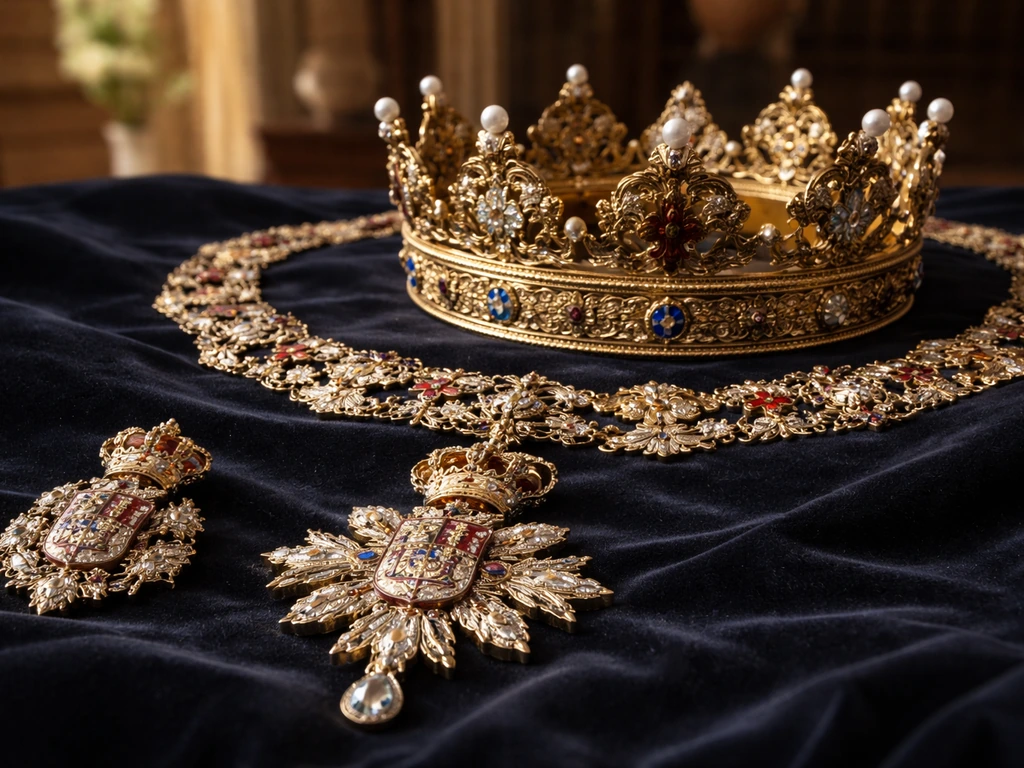
The title 'Duchess of Medinaceli' (Duquesa de Medinaceli) is one of Spain's oldest hereditary noble titles, carrying the dignity of Grandee of Spain, and it has passed through several hands over the centuries. When people search for it today, they usually mean one of two specific individuals, and it matters which one you are researching.
Victoria Eugenia Fernández de Córdoba y Fernández de Henestrosa (16 April 1917 to 18 August 2013) was the duchess most associated with the modern Medinaceli wealth story. She is referenced in news archives as the XVIII duquesa de Medinaceli and held the title until her death. Her inheritance became the subject of extensive litigation that has produced some of the most concrete publicly documented numbers tied to the Medinaceli estate.
The current modern holder is Victoria Elisabeth von und zu Hohenlohe-Langenburg, born 17 March 1997, a German-Spanish noble who is recognized as the 20th Duchess of Medinaceli in the current succession line. This is the person net-worth searches conducted today are most technically pointing toward, though concrete personal financial data on her is extremely limited given her relative youth and the foundation-based structure of the Medinaceli patrimony.
Adding to the confusion, the Medinaceli ducal line also controls a large number of subsidiary titles, meaning a single search for 'Duchess of Medinaceli' can return results mentioning entirely different people depending on which subsidiary title a source is referencing. Spanish Wikipedia alone lists a long chain of associated dignities attached to this ducal line.
Net Worth Estimates: What the Numbers Actually Show
No official or independently verified personal net worth figure exists for the current holder, Victoria von Hohenlohe-Langenburg. For the late duchess Victoria Eugenia Fernández de Córdoba, whose estate drove most of the published reporting, the numbers that have circulated in credible Spanish media give us our best anchor points. HOLA (diciembre de 2021) informó que los herederos de la duquesa de Medinaceli se repartirían 20 millones de euros en el contexto de la litigación sucesoria.
| Source / Context | Figure Cited | What It Represents |
|---|---|---|
| Vanitatis / El Confidencial | ~€110 million | Estimated value of Medinaceli heritage patrimony (palaces, artworks, estates) |
| 2021 Sevilla court ruling | €40.5 million | Supplemento de legítima ordered paid to heirs (later reversed on appeal in 2026) |
| HOLA (Dec 2021 context) | €20 million | Reported cash-equivalent share for heirs in inheritance distribution |
| Fundación Casa Ducal | Not disclosed | Foundation assets managed for cultural/heritage purposes, not personal wealth |
Taking these data points together, a reasonable working estimate for the total Medinaceli estate value (not personal net worth of any individual) sits in the range of €80 million to €120 million, heavily weighted toward illiquid assets like palaces, historic properties, and artwork. The personal liquid net worth of any individual title holder is almost certainly a fraction of that headline figure, because the bulk of the assets are controlled by the Fundación Casa Ducal de Medinaceli rather than held personally.
How Aristocratic Net Worth Is Actually Calculated

Estimating net worth for a Spanish noble title holder works differently from calculating the wealth of, say, a tech CEO or a pop star. The assets are typically spread across several categories, and many of them are neither liquid nor straightforward to value.
- Real estate and palaces: The Medinaceli house's most cited asset is the Casa de Pilatos in Seville, described as the permanent residence of the Dukes of Medinaceli. Properties like this carry significant appraised value but are often encumbered by heritage protections, usufructs, or foundation ownership structures that limit personal control.
- Artworks and moveable heritage: The patrimony reportedly includes significant art collections. These are valued at auction estimates but are often legally restricted from sale under Spanish cultural heritage law.
- Land and rural estates: Aristocratic Spanish families historically held extensive agricultural and rural land. Income from these holdings (farming, hunting rights, tourism) contributes to cash flow but is rarely fully disclosed.
- Foundation income: The Fundación Casa Ducal de Medinaceli generates its own income primarily from entrance fees to monuments open to public visit. This goes back into the foundation's cultural mission, not into a title holder's personal account.
- Investment portfolios and business stakes: Like most large noble houses, private investments likely exist but are not publicly reported.
- Inheritance and legal claims: In the Medinaceli case specifically, the litigation process has made some estate valuations unusually public, which is why figures like €40.5 million and €110 million have appeared in court documents and media.
The critical thing to understand is that 'estate value' and 'personal net worth' are not the same. When Vanitatis reports a €110 million patrimony, that is the appraised collective value of all assets attached to the ducal house. What any one person actually controls, can sell, or could convert to cash is considerably smaller.
Why Estimates Differ So Much Across Websites
If you search for 'Duchess of Medinaceli net worth' across several sites, you will likely find figures ranging from a few million dollars to well over a hundred million. You may also see similar confusion when people search for Niccolò Machiavelli net worth, since historical reputations can get mixed with modern estimates Duchess of Medinaceli net worth. If you are looking for the al madrigal net worth specifically, focus on the most credible sources and note where estimates blend estate value with personal holdings. Niccolò de Masi net worth discussions often highlight how public valuations can differ from personal, liquid wealth due to structure and reporting gaps. Here is why those numbers are so inconsistent.
- Different people, same title: Some sites are estimating the net worth of the late duchess Victoria Eugenia (died 2013), others are attempting to estimate the current holder. These produce fundamentally different numbers because the legal picture changed significantly after the inheritance.
- Foundation assets counted as personal wealth: Many estimators fold the entire Medinaceli foundation patrimony into a personal net worth figure without accounting for the fact that those assets legally belong to a charitable foundation, not to an individual.
- Currency and timing: Figures reported in euros from Spanish courts or media are sometimes converted to USD at fluctuating exchange rates and then republished years later without updating.
- Court documents vs. market value: The €40.5 million figure from the Sevilla court ruling reflects a specific legal calculation of legitimate heirs' shares, not a comprehensive appraisal of total wealth. Sites that use it as a net worth figure are applying it incorrectly.
- No public filings: Unlike publicly traded companies, Spanish noble families have no legal obligation to disclose personal finances. Every estimate is built on inference from real estate records, court filings, and media reports.
How to Verify This Yourself

If you want to go beyond published estimates and check the underlying data yourself, there are a few concrete steps worth taking.
- Check the Nota Simple: In Spain, a 'Nota Simple' from the Registro de la Propiedad shows who legally holds title to a specific property, whether there are mortgages or usufructs attached, and the registered value. For a property like Casa de Pilatos in Seville, this is the most reliable way to confirm actual ownership and encumbrances. You can request a Nota Simple online through the Colegio de Registradores.
- Review the foundation's economic memory: The Fundación Casa Ducal de Medinaceli publishes a Memoria Económica (annual financial report). The 2022 edition is publicly available on their site. While this does not equal personal net worth, it shows the financial activity of the entity that controls the bulk of the Medinaceli assets.
- Search court records via CENDOJ: Spain's official judicial documentation center (cendoj.poderjudicial.es) publishes appellate court decisions. The Audiencia Provincial de Sevilla ruling from 2026 reversing the €40.5 million inheritance judgment is findable here and gives the most legally grounded picture of how the estate was valued.
- Cross-reference Spanish financial press: EL PAÍS, Cinco Días, and El Confidencial have covered the Medinaceli inheritance litigation in detail. Reading the reporting chronologically gives you a clearer picture than any single net worth estimate.
- Treat celebrity net worth databases as a starting point, not a conclusion: Sites that publish a single clean net worth figure for aristocrats are almost always working from the same limited pool of public data points, often the same court figures and media reports described above.
The Title History and What Actually Drives Medinaceli Wealth
The Ducado de Medinaceli takes its name from the municipality of Medinaceli in the province of Soria, Castile. The house traces its lineage to Prince Fernando de la Cerda, a son of Alfonso X of Castile, making it one of the most ancient aristocratic lines in Spain. That historical depth is directly relevant to wealth because it means centuries of accumulated land grants, entailed estates, and artwork that have compounded in value over time.
The main wealth drivers historically tied to this title include the Casa de Pilatos in Seville (one of the finest Renaissance palaces in Spain), the Pazo de Oca in Galicia (a celebrated baroque garden estate), a significant art collection accumulated over generations, and rural landholdings across multiple Spanish regions. The foundation model, established to manage this patrimony, was specifically designed to keep these assets together rather than allow them to be divided and liquidated through inheritance.
That foundation structure is the single most important factor to understand when interpreting any net worth figure. The 2026 ruling by the Audiencia Provincial de Sevilla, which reversed the lower court's €40.5 million judgment against the foundation, reinforced that the patrimony stays within the foundation rather than being distributed to individual heirs. In practical terms, this means the current title holder, Victoria von Hohenlohe-Langenburg, controls prestigious historical assets and a noble title, but her personally accessible liquid wealth is likely far below what the €110 million headline estate figure suggests.
For context, this kind of complexity around aristocratic wealth is not unique to Medinaceli. Comparable situations arise when researching other historic noble or dynastic fortunes, where the gap between appraised patrimony and personally accessible wealth can be enormous. The foundation and institutional ownership model is a common mechanism across European aristocratic families for managing intergenerational wealth while limiting tax exposure and preventing asset dispersal.
The Bottom Line on the Numbers
The Medinaceli ducal estate, taken as a whole, is credibly estimated at roughly €80 million to €110 million in total asset value, based on Spanish media reporting, court valuations, and the known properties attached to the house. Of that, the personally accessible net worth of any current title holder is likely in the range of single-digit to low tens of millions of euros, given that the majority of the patrimony sits within the Fundación Casa Ducal de Medinaceli and is legally encumbered by its cultural heritage mission. Any website quoting a single, clean number for the 'Duchess of Medinaceli net worth' without these caveats is presenting an oversimplified picture of a genuinely complicated financial situation. Cosimo de Medici net worth is often discussed in a similarly broad way, but getting to a real figure requires separating historical holdings from what can be personally accessed. Duke Castiglione net worth is often discussed online in the same way, with widely varying figures that depend on how much of the wealth is personally controlled versus institutionally held.
FAQ
Why do different websites give wildly different “Duchess of Medinaceli net worth” numbers?
If the source does not clearly say “estate patrimony” or “total ducal patrimony” versus “personal liquid net worth,” treat it as unreliable. For Medinaceli, most headline numbers are driven by assets held through the Fundación Casa Ducal de Medinaceli, so personal net worth is usually much lower than the appraised estate value.
How can I verify the Duchess of Medinaceli’s net worth when personal financial statements are not public?
You can’t verify a single living-holder net worth from public records the same way you would for most modern celebrities, because ownership is institutional and many assets are illiquid. The best practical substitute is to verify (1) which person the source means, (2) which entity owns the properties, and (3) which court valuation or published appraisal is being referenced.
Do searches for “Duchess of Medinaceli” sometimes mix up different people?
No, the title is connected to an entire noble house with subsidiary dignities, so results can refer to different family members depending on the source’s naming convention. A quick check is to confirm the full name, dates of succession mentioned, and whether the article is about the XIX or XX duchess in the current line.
Why can the duchess be associated with a large € value but still have limited personal cash?
Many “net worth” articles implicitly convert illiquid assets, like palaces, artwork, and protected heritage properties, into cash value. Even if the estate appraises at roughly €80 million to €110 million, the title holder’s personally accessible funds may be limited by legal duties, the foundation structure, and restrictions around cultural-heritage assets.
What keywords in articles help me tell whether an estimate is estate-based or personal-based?
Look for wording that distinguishes “patrimonio” (overall patrimony) from “riqueza personal” or “net worth of the duchess.” Also check whether the figure matches a documented valuation discussed in Spanish reporting or court context, rather than a generic online estimate.
What are common mistakes people make when interpreting “net worth” numbers for Spanish noble houses?
If you see a single number stated without a valuation basis, entity name, or asset breakdown, assume it is a blended estimate. A more credible approach breaks the figure into categories, at least separating heritage assets and art from any liquid holdings, and noting foundation ownership.
How do I know whether a net worth figure is assuming direct ownership by the duchess?
For Medinaceli specifically, confirm the foundation ownership angle before treating any “net worth” claim as personal wealth. If the claim implies direct personal ownership of palaces and major art assets, it likely contradicts the foundation-based structure described in Spanish reporting.
What’s a practical step-by-step way to narrow the range to a more believable estimate?
A simple next step is to cross-check the same person across multiple Spanish-language references that identify the foundation or ducal house entity, then compare whether they cite a valuation or a court-linked figure. If the numbers vary but the underlying appraisal base stays consistent, you can narrow the range more confidently.
Next Articles

Niccolo Machiavelli Net Worth: What We Know and Estimates
Niccolò Machiavelli net worth explained: what records show, why estimates vary, and how to read speculative figures.

Cosimo de Medici Net Worth: Likely Wealth Range Explained
Estimate Cosimo de Medici net worth range, why it’s speculative, and how historians value his Renaissance wealth today

Al Madrigal Net Worth: 2024 to 2025 Estimate and How It’s Calculated
Al Madrigal net worth 2024-2025 estimate, how it’s calculated, income sources, and how to verify key public signals.