
The most commonly cited estimate for Altina Schinasi's net worth is around $5 million, based on figures circulating on biography and net worth aggregator sites. That number is plausible given her career as an artist and inventor with lasting commercial impact, but it comes with real caveats: Schinasi passed away in 1999, meaning any estate value would have transferred to heirs or institutions decades ago, and no verified primary source has ever confirmed a specific figure. Treat the $5 million figure as a rough ballpark, not a confirmed total.
Altina Schinasi Net Worth: Estimates, Sources, and Drivers

Marcus Kellerman
3 May 2026
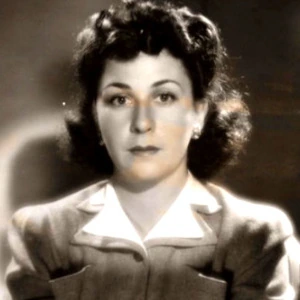
What 'Altina Schinasi net worth' usually refers to

When people search this name in a net worth context, they are almost always looking up the American artist and inventor Altina Schinasi (1907–1999), best known for creating the Harlequin cat-eye eyeglass frame in the 1930s. If you also see the phrase "dj orazio rispo net worth" in search results, it is typically referring to a separate individual and should not be blended with Altina Schinasi's figures net worth estimate.
She is a historical public figure, not a current celebrity or influencer. That distinction matters a lot for net worth research: there are no recent interviews, no public financial disclosures, and no ongoing income streams to anchor an estimate. Any figure you see online is a retrospective estimate of peak lifetime wealth, not a current valuation.
It is worth noting that some lower-authority biography sites lump together living and deceased figures without making that distinction clear. If you landed on a page listing 'Altina Schinasi net worth 2026,' that framing is misleading. The number being discussed reflects estimated lifetime or estate wealth, not an active financial snapshot.
Biographical background that shapes the estimate
Altina Schinasi was born in New York City in 1907 into a wealthy family. Her father, blank" rel="noopener noreferrer">Morris Schinasi, was a Turkish-born tobacco magnate who had built a significant fortune in the United States. That family wealth is a relevant starting point because inherited wealth often seeds an individual's financial foundation, especially for artists and designers who may not generate enormous business income on their own. Altina Schinasi lived in the Schinasi Mansion with her family for almost twenty years, supporting the broader context of inherited family wealth blank" rel="noopener noreferrer">lived there with family for almost twenty years.
Her most commercially significant achievement was designing the Harlequin eyeglass frame around 1939, a cat-eye style that became a defining fashion accessory of the mid-20th century. She also worked as a painter, sculptor, and filmmaker across her long life. She was married multiple times, including to writer George Davis and later to journalist Orson Bean, and was connected to prominent cultural circles in New York and Europe. She died in 1999, which means any net worth estimate reflects a historical figure whose estate has already been distributed.
The net worth estimate: what the range looks like and why

The most frequently cited figure is $5 million. Sites like Celebrity-Birthdays list this number but attribute it to a generic 'analysis' of sources like Wikipedia, Forbes, and Business Insider, without showing any actual calculation or primary evidence. No major financial publication has independently reported a net worth figure for Schinasi. Given that context, here is a reasonable way to think about the range:
| Scenario | Estimated Range | Reasoning |
|---|---|---|
| Conservative estimate | $1M – $3M | Art and design income alone, modest inheritance share, no major royalty streams documented |
| Mid-range estimate | $3M – $7M | Combined family inheritance, eyeglass frame licensing or sales impact, art sales over decades |
| High-end estimate | $7M – $10M+ | Significant inheritance retained, major art sales, broader intellectual property value of the Harlequin design |
The $5 million figure sits comfortably in the middle of this range, which is probably why it gets repeated. It is not implausible, but it is also not verified. Think of it as an educated guess rather than a documented figure.
Income sources that drive the estimate
Because Schinasi was a historical figure with multiple creative careers, the wealth calculation draws from several potential income streams. Understanding each one helps you assess how realistic any total estimate really is.
- Eyeglass frame design: The Harlequin cat-eye frame became an iconic commercial product. Whether Schinasi received ongoing royalties or a one-time payment for the design has never been publicly documented in detail. If she held intellectual property rights over time, that would significantly boost any wealth estimate. If she sold or transferred the design early, the long-term financial benefit to her personally would be much smaller.
- Visual art sales: Schinasi worked as a painter and sculptor across several decades. Original artwork can carry substantial market value, particularly for artists with cultural recognition, but sale records are not widely publicized.
- Filmmaking: She directed at least one documentary film. Film income for independent or documentary filmmakers in the mid-20th century was rarely a major wealth source unless tied to major studio deals.
- Family inheritance: Her father's tobacco fortune is the most likely foundational wealth factor. How much she inherited and how it was managed or distributed among family members is not publicly known.
- Real estate: Like many affluent New Yorkers of her era, she may have held real estate assets. Property values in New York appreciated dramatically over the 20th century, and any holdings would have added significantly to estate value.
Assets and lifestyle signals: what we can reasonably infer
Schinasi lived and worked in New York and had connections to the cultural elite of the mid-20th century. That social context suggests a comfortable, upper-middle-class to wealthy lifestyle, but it does not directly confirm specific asset values. Lifestyle signals for historical figures are inherently limited: we can note that she moved in well-funded artistic circles, that her family background was wealthy, and that she sustained a creative career over many decades without apparent financial hardship. These are soft indicators, not hard numbers.
For someone in her position, typical asset categories that researchers would estimate include primary and secondary real estate, art collections (both her own work and pieces she may have owned), and any business stakes tied to the eyeglass design. Without probate records or estate filings that have been made public, these remain estimates. Property records from New York, if accessible for her era, would be the strongest signal available to a diligent researcher.
How net worth calculations actually work (and why figures vary)
Net worth is calculated as total assets minus total liabilities. For living celebrities, researchers estimate this using a combination of reported salaries, known business stakes, real estate records, and comparable industry benchmarks. For deceased historical figures like Schinasi, the methodology shifts: analysts rely on career earnings modeling (estimating what someone in her field would have earned over a given period), known family wealth context, any available estate or probate information, and inflation-adjusted comparisons.
The reason different sites report different numbers comes down to which of these inputs they weight. A site that emphasizes her family wealth will land at a higher number. A site that only credits her art and design income will arrive at a lower one. Neither approach is necessarily wrong; they just reflect different assumptions about inputs that cannot be verified with certainty. This is why you should always treat any specific figure as an estimate with a meaningful margin of error, not a precise balance sheet total.
This same challenge applies across many historical public figures in the net worth research space. Unlike current public figures where financial disclosures, contract leaks, or investigative reporting can sharpen estimates, historical figures depend almost entirely on secondary inference.
Where to look for better data and how to verify what you find

If you want to go beyond the $5 million figure and either confirm or challenge it, here are the most productive places to look:
- Probate and estate records: In the United States, estate records are often part of the public court record. Searching New York Surrogate's Court records for Altina Schinasi's estate filing from around 1999 could surface actual asset valuations disclosed at the time of death. This is the closest thing to a primary source for a deceased individual's wealth.
- Art auction records: If her paintings or sculptures have been sold at auction, databases like Artnet or AskArt list sale prices. Aggregating those figures gives a floor estimate for the value of her artwork at market.
- Intellectual property filings: Patent or trademark records related to the Harlequin eyeglass design could clarify whether she held formal IP rights and, if so, whether any licensing income was ever documented.
- Biographies and documentary coverage: Schinasi was the subject of a documentary film ('Altina,' released in 2014 by her granddaughter). Interviews tied to that film may contain statements from family members about her financial legacy or art sales.
- Newspaper archives: Historical newspapers (accessible through ProQuest Historical Newspapers or the New York Times archive) sometimes covered notable estates, particularly when a design as culturally significant as the cat-eye frame is involved.
- Reputable net worth aggregators with sourcing: Sites that cite specific methodologies or link to primary documents are more trustworthy than those presenting a lump sum with no explanation. Cross-reference any figure you find against at least two independent sources.
One practical note: low-authority biography sites that present a clean round number like '$5 Million' without sourcing are generally pulling from each other, not from original research. The more sites repeat the same number, the less that repetition should be taken as confirmation. It often just means one site coined the figure and others copied it.
Putting it all together
Altina Schinasi was a genuinely accomplished and historically significant figure whose wealth likely reflected a combination of family inheritance, design royalties or proceeds, and a long career in the arts. The $5 million estimate that circulates online is plausible but unverified, and the true figure could reasonably sit anywhere between $2 million and $10 million depending on inheritance and IP income factors that have never been publicly confirmed.
If you are comparing other famous designer wealth guesses, you may also want to review rocco abessinio net worth for a similar pattern of estimate-based reporting rather than verified filings. If you are specifically asking about Zanotti net worth, you will need to rely on the same kind of sourcing and verification standards described for Schinasi’s estimates $5 million estimate.
For anyone doing serious research, the estate records and the 2014 documentary coverage are the best starting points for sharpening that range.
FAQ
How can I tell if a “current” Altina Schinasi net worth claim is misleading?
If the page uses a year like “2026” or mentions “monthly income,” it is almost certainly rebranding an old retrospective estimate. For a person who died in 1999, there is no ongoing income, so any “current valuation” language usually means the site is not using estate or probate information, just generic modeling.
What would a more credible Altina Schinasi net worth number rely on?
The most credible figures would be tied to verifiable estate or probate filings, identifiable asset sales, or documented IP and royalty records related to her eyeglass frame designs. In practice, many sites skip those and rely on repeated round-number estimates, which is why their totals cluster around similar figures.
Why do some websites give much lower or much higher numbers than $5 million?
Differences usually come from assumptions about inherited wealth versus personal earnings. A site that heavily weights her family fortune will push the estimate higher, while one that mostly credits her creative work and design proceeds will lower it. Without transparent inputs, those totals are best treated as scenario ranges, not facts.
Could the Harlequin eyeglass frame have generated long-term royalty income?
Potentially, but only if the relevant rights were structured that way and if royalties continued into later years. Many net worth summaries assume design “impact” automatically equals ongoing payments, which may or may not reflect her actual contractual ownership and estate handling of IP.
How do inflation and time period changes affect a historical net worth estimate?
Some estimates implicitly use dollars from the time of death, while others may present modern dollar equivalents or mix methodologies. That can make two numbers look inconsistent even if they are based on similar underlying earnings modeling.
Does Altina Schinasi’s multiple marriages significantly change net worth estimates?
It can, but only if you have records showing how assets were held, transferred, or settled through marriages and later divorces. Most online net worth totals do not show those details, so the marriages are usually context, not a strong driver of the numeric estimate.
What is the easiest way to sanity-check a stated net worth range like $2 million to $10 million?
Ask what assets the number must cover. For example, a high estimate should plausibly account for significant real estate, liquid investments, or valuable art holdings and surviving business interests. A low estimate should still be consistent with her lifestyle and multi-decade career, but it may treat many assets as modest or already distributed through her family or estate.
Are there common copy-paste mistakes or name confusion in “net worth” searches for her?
Yes. The article notes unrelated results like “dj orazio rispo net worth,” and similar mix-ups happen when search terms pull in other people with overlapping keywords. Always verify the biography context (1907–1999, New York City, Harlequin cat-eye frame) before trusting any number attached to the name.
If I want to confirm or challenge the $5 million figure, what should I look for first?
Start with estate and probate documentation, then corroborate any claimed asset categories like property records and documented art holdings. If those are unavailable, the next-best step is locating primary or near-primary accounts about income, rights ownership, or major asset transfers, since biography sites alone rarely produce a calculation.
Next Articles

Al Sapienza Net Worth: Which One and How to Estimate Today
Al Sapienza net worth guide: confirm the right person, compare estimates, and estimate wealth using assets, income, debt

Rocco Abessinio Net Worth: Estimated Wealth and Breakdown
Rocco Abessinio net worth estimate with range, income sources, asset factors, why numbers differ, and how to verify toda

Ava Frati Net Worth Estimate: Range, Income Sources, and How to Verify
Ava Frati net worth range estimate, income sources, and a checklist to verify net-worth claims reliably.