
The Sistine Chapel doesn't have a net worth. It's a building inside Vatican City, owned by the Holy See, so no personal balance sheet exists for it the way one would for a celebrity or athlete. What you can find are the next best things: operating budgets, maintenance costs, restoration spending, and tourism revenue figures that together give you a meaningful picture of the Chapel's financial footprint. Those numbers are real, data-backed, and genuinely useful once you know where to look.
Sistine Chapel Net Worth: Budget, Funding, and Costs Explained

Marcus Kellerman
27 May 2026
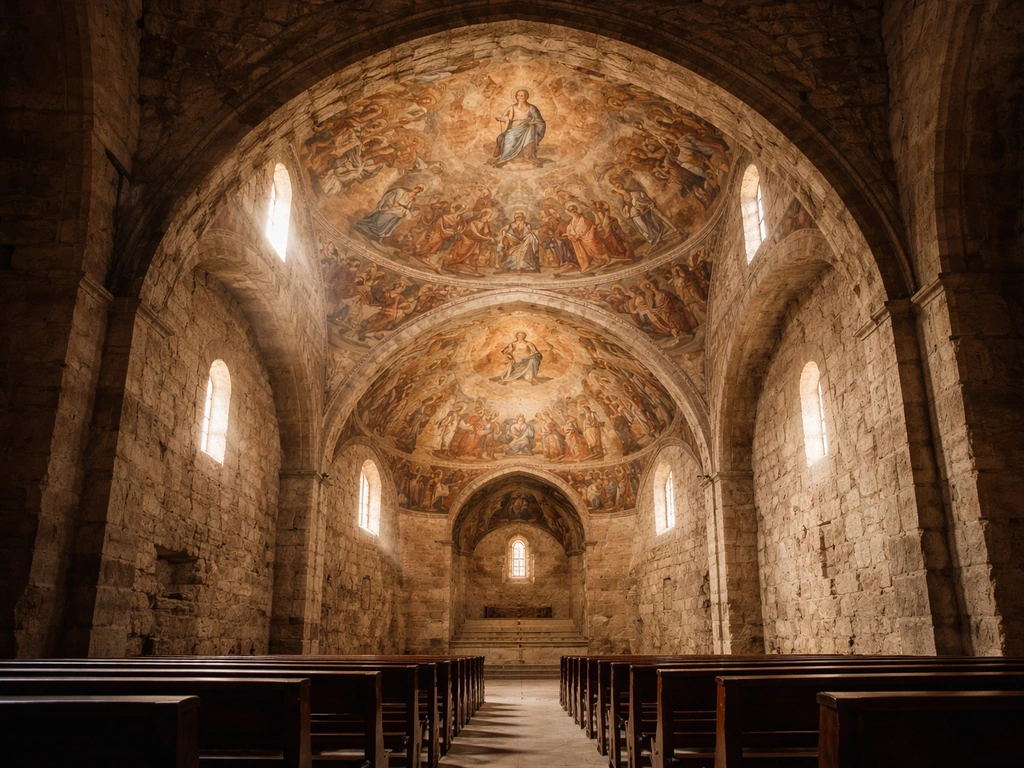
Why 'net worth' doesn't apply to the Sistine Chapel
Net worth is a personal finance concept: total assets minus total liabilities for an individual or a business entity. The Sistine Chapel is neither. It's a consecrated chapel and cultural monument that sits within Vatican City State, a sovereign entity governed by the Holy See. It cannot be bought, sold, or placed on an open market. Its art, including Michelangelo's ceiling and the Last Judgement fresco, has no realistic sale price because it is functionally inalienable from the Vatican's heritage and from international cultural law.
That said, when people search for the Sistine Chapel's net worth, they're usually trying to get at something legitimate: how expensive is this place to run? How much is it worth in economic terms? How much does all that restoration actually cost? Those are fair questions, and they have answers, even if those answers come with uncertainty ranges rather than a single clean figure.
This is a recurring pattern on net worth lookups more broadly. If you are also searching for christian idiodi net worth, the same idea applies: when a subject does not fit the standard template, it helps to switch to comparable income and asset signals instead of forcing one neat number net worth lookups. When a subject doesn't fit the standard individual-wealth template, the most useful move is to translate the question into comparable metrics. Think of it like researching the net worth of a large foundation or a royal family: you end up looking at endowment values, annual revenues, and asset appraisals instead of a paycheck and investment portfolio. The Sistine Chapel works the same way.
Budgets, operating costs, and what it actually costs to maintain the Chapel
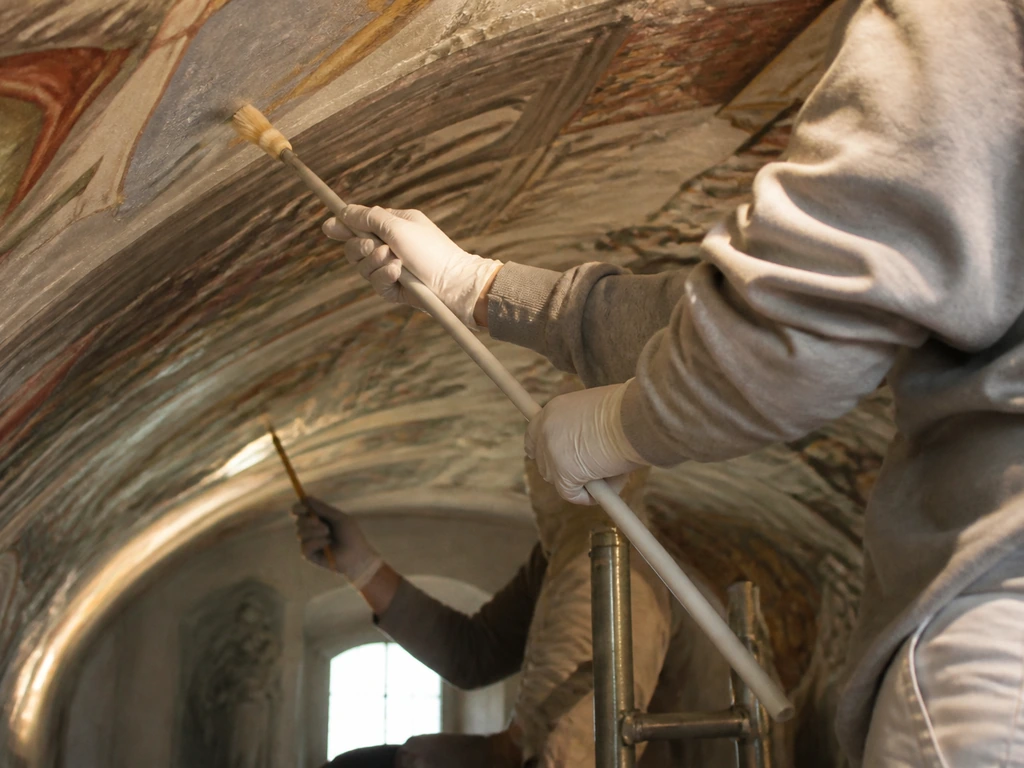
The Vatican doesn't publish a line-item budget specifically for the Sistine Chapel. What it does publish, through the Secretariat for the Economy, are consolidated financial statements for the Holy See. The most recent publicly available version covers 2024 and is hosted directly by the Secretariat for the Economy as a PDF. These statements follow IPSAS (International Public Sector Accounting Standards), a methodology Vatican City State formally adopted as part of financial reforms first referenced in public communications around 2015 and 2016. The Governatorato of Vatican City State's surplus in years like 2015 was explicitly linked to revenue from cultural activities tied to the museums, which gives you a sense of how the Chapel fits into the broader Vatican financial picture.
On the maintenance side, the Vatican is unusually transparent about process, if not always about cost. The Directorate of the Vatican Museums runs an Ordinary Maintenance Plan for the Sistine Chapel, documented as having started in the summer of 2010. That plan involves a rotating team: the Painting Restoration Laboratory, the Logistics Office, a dedicated Maintenance Team, and the Conservation Office, all coordinated under the Conservator's Office, which was formalized around 2008. Activities covered include dust removal, environmental diagnostics, and monitoring of the air-conditioning and lighting systems that were installed in 2014.
In February 2026, the Vatican announced a separate round of extraordinary maintenance specifically on the Last Judgement fresco, with scaffolding going up for a roughly three-month project. This was the first major conservation intervention on that fresco since the landmark 1994 restoration, meaning major work cycles on a single fresco can run approximately 30 years apart. That interval itself is a useful data point for estimating the cadence and scale of large expenditures.
What ordinary vs. extraordinary maintenance actually means for costs
Ordinary maintenance is ongoing and relatively modest in scale: regular cleaning, environmental checks, small-scale conservation touch-ups. Extraordinary maintenance involves scaffolding, specialist restorers, diagnostic imaging, and extended project timelines, all of which drive significantly higher costs. The 2026 Last Judgement project is a good example of the latter. While the Vatican has not publicly stated a budget figure for this specific project, comparable fresco restoration projects at major European institutions typically run into the hundreds of thousands of euros for a multi-month scaffolded intervention, with larger projects exceeding one million euros when diagnostic work and post-treatment monitoring are included.
Tourism and economic impact as a proxy for the Chapel's value
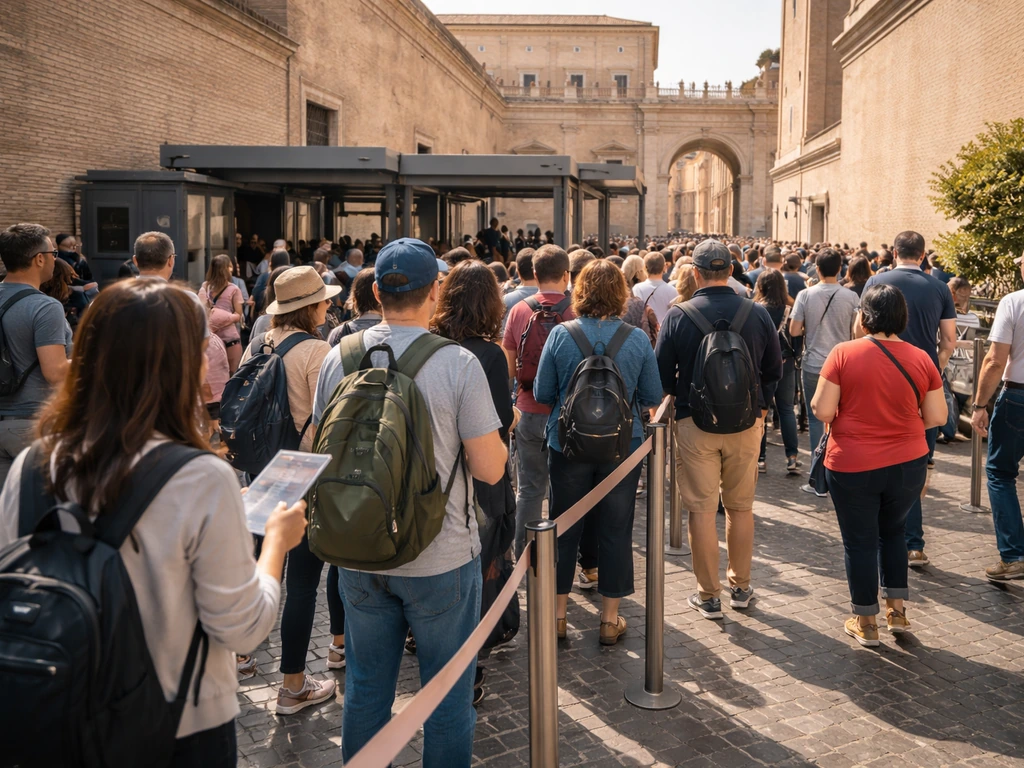
More than 6 million people visit the Vatican Museums each year, according to an Associated Press report from February 2026, and the Sistine Chapel is consistently cited as the primary draw. For context, UNESCO's periodic reporting on the Vatican World Heritage site recorded roughly 3.5 million visitors in 2004, so visitor numbers have roughly doubled in two decades. The Vatican Museums admission policy changes effective January 2024, including phased air-conditioning expansion to protect both visitors and artworks, are evidence that managing this visitor volume is an ongoing capital investment, not just a revenue stream.
If you apply a rough average ticket price for Vatican Museums admission (currently in the range of 17 to 20 euros for standard adult entry) to 6 million annual visitors, you get a gross ticket revenue estimate in the neighborhood of 100 to 120 million euros per year from admissions alone. That doesn't include guided tours, audio guides, special access bookings, or retail. This isn't the Sistine Chapel's revenue in isolation, since entry covers the entire museum complex, but the Chapel is the anchor attraction that drives the majority of that demand.
Beyond ticket revenue, the economic footprint of the Sistine Chapel extends into Rome's broader tourism economy: hotels, restaurants, transport, and related services all benefit from Vatican visitor traffic. These downstream effects are notoriously hard to isolate and quantify, but they easily run into the billions of euros annually when aggregated across the city. Cultural economists often use multiplier models to estimate this, though Vatican-specific studies using that methodology are not widely published in accessible form.
How net worth-style estimates are calculated and why numbers vary
For individual public figures on sites like this one, net worth estimates are typically built by aggregating known income sources (salaries, endorsements, royalties), publicly reported asset values (real estate, business stakes, investments), and then subtracting estimated liabilities. The result is always a range, not a precise number, because most assets are privately held and actual figures are rarely disclosed in full.
Applying that same framework to the Sistine Chapel produces a very different kind of estimate. You'd be looking at something closer to an institutional asset valuation: replacement cost of the physical structure, art insurance-equivalent values, annual revenue contribution, and the cost of maintaining the endowment of expertise and infrastructure required to keep it operational. None of those figures are routinely published in a consolidated form, which is why you see wildly different numbers cited in various media, ranging from a few hundred million dollars to multi-billion-dollar cultural asset appraisals. The variation reflects different methodologies, not different facts.
The most responsible framing, and the one that holds up to scrutiny, is to treat the Chapel's financial identity as a bundle of measurable components: annual operating costs, restoration project budgets, and tourism revenue contribution. Each of those has a verifiable (or at least reasonably estimable) range. Collapsing them into a single 'net worth' figure is appealing but ultimately misleading. This is why people looking for the passion of christ net worth usually end up with estimates rather than a single verifiable figure.
| Financial Metric | Estimated Range | Notes |
|---|---|---|
| Annual Vatican Museums ticket revenue (gross) | ~€100–120 million | Based on ~6M visitors at €17–20 avg. ticket price; covers full museum complex |
| Ordinary maintenance (annual, Chapel-specific) | Not publicly itemized | Covered under Vatican Museums Directorate budget; involves multiple specialist teams |
| Extraordinary restoration project (Last Judgement, 2026) | Estimated €500K–€2M+ | Comparable European fresco projects; Vatican has not published a figure |
| Major restoration cycle frequency | ~30 years per major fresco | Last major intervention on Last Judgement was 1994; next began Feb 2026 |
| Replacement/insurance-equivalent cultural value | Effectively incalculable | Inalienable heritage; no open-market comparable exists |
Where to find reliable data and how to verify what you see

If you want to go directly to primary sources rather than rely on aggregated estimates, here's a practical step-by-step approach.
- Start with the Secretariat for the Economy (SPE) at the Vatican. The 2024 Holy See Consolidated Financial Statements are publicly hosted as a PDF. Search for 'Secretariat for the Economy Holy See financial statements 2024' and look for the SPE's official domain. These follow IPSAS accounting standards and are the closest thing to an audited institutional balance sheet.
- Check the Governatorato of Vatican City State press releases. The Vatican press archive (press.vatican.va) contains annual financial communications that break out the Governatorato's surplus or deficit and identify cultural activities as a revenue driver.
- Look at Vatican Museums official press releases for maintenance and restoration announcements. The February 2026 press releases on the Last Judgement extraordinary maintenance are publicly available and describe the project scope, participating teams, and timeline.
- For visitor statistics, cross-reference the Vatican Museums' own published data with UNESCO World Heritage Committee periodic reports (available at whc.unesco.org). UNESCO reports contain official visitor counts submitted by the Holy See at specific reporting intervals.
- For broader tourism economic impact, look for studies published by the Rome Chamber of Commerce or Italian national tourism research bodies (ENIT). These occasionally model Vatican-specific visitor spending.
- Triangulate any media-reported figures against the above primary sources. If a number doesn't trace back to the SPE, the Vatican Museums, or a verifiable institutional study, treat it as speculative.
One practical note: the Vatican's financial reporting has become significantly more transparent since adopting IPSAS around 2015. Reports from before that period use different accounting frameworks and are harder to compare directly. If you're building a historical picture, flag that methodological discontinuity.
What number to actually use and how to interpret it
If you need a single figure to represent the Sistine Chapel's financial significance, the most defensible one is the Vatican Museums' annual revenue contribution, estimated at roughly 100 to 120 million euros per year in ticket admissions alone. That number is grounded in publicly reported visitor counts and observable ticket pricing, making it the most transparent and replicable estimate available.
If you're writing about cultural asset value or trying to convey the Chapel's wealth-equivalent stature, the honest framing is that it is effectively priceless in market terms, not as hyperbole, but as a functional description of an asset that cannot be sold and has no market comparables. Any specific dollar or euro figure attached to the art or the building itself should be treated as an illustrative estimate, not a financial fact.
For context within this site's broader scope, it's worth noting that net worth estimates for individuals in entertainment, sports, and public life involve similar uncertainty, just expressed differently. If you came here from a search like Cristina Carta Villa net worth, the same idea applies: use verifiable, transparent sources and be cautious about ranges. For people searching for "dan cristiani net worth," the goal is similar but applied to an individual’s finances rather than the Chapel’s institutional value.
A celebrity's estimated net worth might vary by tens of millions of dollars across different sources depending on assumptions about private investments, real estate valuations, or undisclosed income. If you are trying to understand dan cristiani net worth in particular, you should still treat online figures as ranges and verify the underlying income and asset claims estimated net worth. The Sistine Chapel situation is an extreme version of that same problem: the asset is real, the value is enormous, but the number resists precise calculation. That's not a flaw in the research; it's an honest reflection of how wealth and value work at the institutional and cultural level.
If you arrived here while exploring related wealth profiles in this space, the same verification principles apply regardless of the subject. Whether you're looking at an individual public figure or trying to contextualize an institution like the Sistine Chapel, the methodology is the same: identify the most transparent data sources, acknowledge the assumptions built into any estimate, and present a range rather than a false precision. That approach holds up whether you're researching a film director, a musician, or one of the most visited cultural monuments on earth.
FAQ
What should I call it if I do not want to use the term “net worth” for the Sistine Chapel?
Use “economic footprint” or “annual operating impact” instead. A single “net worth” number would require market-style valuation and saleable ownership assumptions that do not apply to consecrated, inalienable heritage property.
Where can I find Chapel-specific financial data if there is no published line-item budget?
In the Vatican context, the closest public number is usually consolidated Holy See financial reporting under IPSAS, not a Chapel line item. For Chapel-specific budgeting, you typically rely on published conservation plans and project announcements, then map them to multi-year cost cycles.
If 6 million people visit, can I assume all ticket revenue belongs to the Sistine Chapel?
Be careful with visitor and ticket revenue math. Admission revenue at the Vatican Museums is for the whole museum complex, so attributing all ticket income to the Chapel overstates the Chapel’s direct contribution. Better approaches use visitor share, time-in-museum behavior, or conservative attribution ratios.
Does the time gap since the 1994 restoration tell me how much the 2026 extraordinary work might cost?
Yes, but treat it as a planning indicator, not a cost proof. A “30-year cadence” between major interventions suggests the scale and frequency of extraordinary work, yet each project can vary widely depending on condition, conservation findings, and technology used (for example diagnostic imaging intensity).
What costs are commonly missed when people estimate expenses using only ticket revenue?
The ticket revenue estimate you see often covers admissions only, not capital replacement needs or indirect costs (staffing, security, environmental systems). A more complete estimate adds operational overhead and conservation labor, then checks whether major utilities upgrades are already reflected elsewhere in Vatican reporting.
How do I model restoration costs over time if scaffolding and diagnostics happen at the start of a project?
Extraordinary restoration usually comes with higher “front-loaded” expense because scaffolding, specialist teams, and diagnostics are required early, with additional monitoring later. If you’re modeling yearly costs, do not spread the full budget evenly across the calendar months.
When estimates say the Chapel is funded by ticket revenue, is that directly true?
Assumptions about who pays matter. Many “public estimate” articles implicitly treat museum admissions as if they were paid directly for the Chapel’s upkeep. In reality, revenue supports the wider Vatican cultural operation, and the Chapel is one major driver within that system.
Why do art appraisal methods not produce a true “financial net worth” for the Chapel?
Avoid “market value” comparisons. Even if you estimate replacement cost, insured value, or art-specific insurance-equivalent figures, you still will not get a legal sale price, so it will not behave like an asset you can monetize.
Can I estimate Chapel value by using overall Vatican surplus and dividing it by the Chapel’s importance?
Yes, a common mistake is taking “Vatican revenue” and subtracting “Vatican expenses” as if the result would map one-to-one to the Chapel. Better is to estimate the Chapel’s share using drivers like conservation program scope, visitor behavior, and museum operational allocations.
If someone insists on one figure, how can I compute it responsibly?
If you must produce a single number for a report, build it transparently from components and label the method. A defensible approach is an “equivalent economic annual value” based on admission contribution plus conservational spending, then state a range and the attribution assumptions explicitly.
What’s a quick way to verify whether a viral “net worth” claim is credible?
To sanity-check claims, compare three independent signals: (1) timing and scope of published maintenance or project announcements, (2) size of visitor-driven revenues for the museum complex, and (3) whether the accounting framework changed around IPSAS adoption (historical comparisons should not mix eras).
Next Articles

Cristina Carta Villa Net Worth: Estimated Range and Evidence
Cristina Carta Villa net worth estimate with identity checks, evidence, methodology, asset ranges, and confidence level.

Dan Cristiani Net Worth: Estimate, Sources, and How It’s Made
Dan Cristiani net worth estimate: how it’s calculated, why ranges vary, and how to verify sources responsibly.

Passion of Christ Net Worth: Film and Cast Explained
Learn the Passion of the Christ film vs cast net worth meanings, budgets, and how to verify reliable estimates.