
The most widely cited estimate for Leonardo Bonucci's net worth as of 2026 is around $35 million (approximately €32 million). That figure comes from aggregator-style sites rather than audited financial documents, so treat it as a well-reasoned ballpark rather than a confirmed total. Given what we know about his career earnings across Juventus, AC Milan, Fenerbahce, and Union Berlin, combined with endorsement income and likely investments, a range of $30–40 million is a reasonable working estimate.
Leonardo Bonucci Net Worth: Estimate, Sources, and Why It Varies

Marcus Kellerman
17 May 2026
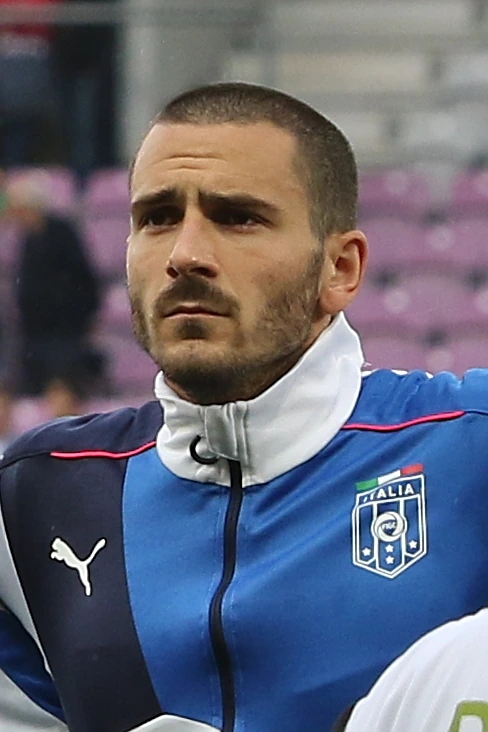
Leonardo Bonucci's estimated net worth at a glance

| Metric | Figure |
|---|---|
| Estimated net worth (2026) | $30–40 million (approx. €27–37 million) |
| Most-cited single estimate | $35 million / €32 million |
| Peak reported annual salary | €7.5–8 million per year (AC Milan era) |
| Last reported contract salary | ~€3.5 million per year (Union Berlin) |
| Retirement year | 2024 |
| International caps | 120+ (Italy, 2010–2023) |
The $35 million figure circulates on several sports finance sites, but none of them publish transparent methodology. The range above ($30–40 million) is more honest: it reflects what can be reasonably inferred from documented contract data, known transfer fees, and the general asset-accumulation patterns of elite Serie A defenders who played at the top level for nearly two decades.
How athlete net worth estimates are put together
Net worth for a professional footballer is not the same as career earnings. The number you see on aggregator sites is an attempt to estimate total assets minus total liabilities at a given point in time. That means adding up accumulated savings from wages, bonuses, commercial deals, and investments, then subtracting debts, taxes, agent fees, and lifestyle spending. Nobody outside a player's accountant knows all those numbers, so every public estimate involves assumptions.
Here is what typically goes into the calculation for an elite European footballer like Bonucci:
- Gross career wages across all clubs (then discounted for taxes, which in Italy can approach 40–45% for top earners)
- Signing bonuses and transfer-related payments
- Performance and appearance bonuses (Juventus documents, for example, reference specific bonus structures in their accounting filings)
- Endorsement and image-rights income
- Assumed savings/investment rate applied to net-of-tax earnings
- Estimated real estate holdings or business stakes (usually speculative unless reported)
- Post-playing income: coaching roles, media appearances, ambassadorships
What aggregators almost always exclude or undercount: taxes paid in multiple jurisdictions, agent commissions (commonly 5–10% of contract value), divorce or legal costs, and pure lifestyle spending. This is why net worth estimates for footballers tend to skew optimistic.
Where Bonucci's money actually came from: salaries, bonuses, and incentives

Bonucci spent the bulk of his career at Juventus, which is where the foundation of his wealth was built. His AC Milan stint (2017–2018, then a longer contract running to 2022 in reporting, though he returned to Juventus after just one season) came with what multiple Italian outlets reported as one of the richest defensive contracts in Serie A history: somewhere between €6.5 million and €8 million per year, with bonuses on top. A 2017 Milan-related report said Sky Sport confirmed Bonucci would earn about €6.5 million per year plus bonuses after he signed for Milan Sky Sport confirmed around €6.5 million per year plus bonuses after the Milan signing. Sky Sport confirmed around €6.5 million, while Tuttosport reported as high as €8 million per season, and ESPN noted reports that the deal would make him Serie A's highest-paid player at the time.
His later years came at lower but still significant wages. At Union Berlin for the 2023–24 season, salary database SalarySport estimated his weekly pay at around €56,840, which translates to roughly €2.95 million per year. Transfer journalist Nicolo Schira reported the gross annual figure closer to €3.5 million, with Juventus reportedly subsidizing part of that sum. Either way, even at the tail end of his career, he was earning well above €2.5 million annually.
Performance bonuses were a documented feature of his contracts. Juventus's own annual filings reference a €2.5 million performance bonus that had already matured during his time there, which gives a concrete example of how incentive structures padded his base wages. International caps (over 120 with Italy) also typically come with federation appearance fees and, in tournament play like Euro 2020 (which Italy won), squad bonuses that can run into six figures per player.
Endorsements, image rights, and business interests
Bonucci has been associated with several commercial partnerships over his career, though he has never been among the sport's most aggressively marketed players in terms of brand income. Further targeted search for Bonucci sponsor pages, partner brand announcements, or trademark and business filings would be needed to retrieve any additional endorsement-related business details commercial partnerships over his career). Players at his level typically structure image rights through a separate company (common in Italian football), which means a portion of their commercial earnings is paid to that entity rather than as personal income, offering tax advantages.
No major standalone sponsorship announcements were prominently documented in public reporting for Bonucci in the way they would be for a Cristiano Ronaldo or Neymar. However, his involvement with Adidas (the kit supplier for both Juventus and the Italian national team) would have included player-level endorsement provisions. His long tenure as a senior Italy international and Juventus captain gave him meaningful brand visibility, which typically translates to commercial arrangements even if individual deal values are not made public.
Post-retirement, Bonucci moved into coaching and technical staff roles. In October 2024, Gazzetta reported he joined Italy's Under-20 setup as a technical collaborator, and Football Italia noted his involvement in the senior Italy coaching structure. These roles pay a fraction of playing wages but represent ongoing income and brand maintenance, which matters for long-term wealth preservation.
The career timeline that shaped his wealth
Understanding Bonucci's wealth requires mapping his career arc to his earning curve. He came up through Juventus's system, had loan spells at Viterbese, Treviso, Pisa, Genoa, and Bari before becoming a first-team mainstay at Juventus from around 2010 onward. His wages during his early Juventus years were solid but not exceptional. The inflection point was the Milan transfer in 2017: Juventus received a reported €40 million plus €2 million in bonuses (per Eurosport), and Bonucci signed what was at the time one of the most lucrative defensive contracts in Italy.
He returned to Juventus after just one season at Milan, then wound down his playing career with a stint at Fenerbahce and finally Union Berlin before retiring in 2024. His peak earning window ran roughly from 2015 to 2023, with the highest annual wages concentrated in the 2017–2022 period. On the international stage, he debuted for Italy in 2010, played in World Cups in 2010 and 2014, European Championships in 2012, 2016, and 2020, and won Euro 2020, amassing over 120 senior caps before retiring from international football in 2023.
| Club / Role | Approximate Period | Reported Annual Earnings |
|---|---|---|
| Juventus (early years) | 2010–2017 | Estimated €2–4 million/year |
| AC Milan | 2017–2018 | €6.5–8 million/year (reported) |
| Juventus (return) | 2018–2023 | Estimated €4–7 million/year |
| Fenerbahce | 2023 | Not publicly detailed |
| Union Berlin | 2023–2024 | ~€2.95–3.5 million/year (estimated) |
| Italy U-20 coaching staff | 2024–present | Staff-level salary (much lower) |
Why net worth figures vary so much across different sites

If you search for Bonucci's net worth today, you will likely see figures that differ by millions of dollars depending on the site. That is normal, and here is why it happens. Sites like Wealthy Gorilla, TheRichest, and similar aggregators each use their own internal models. Some multiply reported wages by career years with a flat savings-rate assumption. Others start from a single reported figure and apply a growth multiplier. None of them have access to his actual bank statements, tax returns, or investment portfolios.
The assumptions that drive the biggest swings include which salary figures they use (Tuttosport's €8 million per year or Sky Sport's €6.5 million per year for the Milan deal alone produces a €1.5 million annual gap), what tax rate they apply (or whether they apply one at all), whether they include or exclude investment returns, and how they handle currency conversion timing (the euro-to-dollar rate affects the USD figure significantly). Sites that do not adjust for taxes can overstate net worth by 30–40% for Italian-based earners.
A practical sanity check: if a site claims Bonucci's net worth is $100 million or more, that is almost certainly inflated. Even at the high end of reported wages with generous investment returns, the math does not support a nine-figure figure for a footballer of his profile. Conversely, estimates below $20 million probably undercount his peak-era earnings. The $30–40 million range is where the evidence realistically points.
How to sanity-check any net worth estimate you find
- Check at least three different aggregator sites (Wealthy Gorilla, TheRichest, Celebrity Net Worth) and note the range, not just one number
- Look for contract-era detail: does the site specify which club and which season the salary figure comes from?
- Verify the currency: is the figure in USD or EUR, and when was the conversion applied?
- Check whether the estimate accounts for taxes (gross vs. net wages make a huge difference)
- Look for coaching/post-playing income: sites that were last updated before his 2024 retirement may be missing the career-stage shift
- Compare against known peers: Bonucci's contemporaries like Giorgio Chiellini and Andrea Pirlo have publicly discussed or had reported net worths in a similar range, which serves as a rough cross-check
How to read his net worth estimate today and what to watch going forward
As of May 2026, Bonucci is in his post-playing phase, working in coaching and technical roles with Italian football. His wealth is no longer growing through footballer wages; instead, it is being maintained (and ideally grown) through investments, commercial arrangements, and his coaching income. This matters because net worth estimates that were accurate in 2022 or 2023 may not account for the transition period: he was likely spending from savings during any gap between his Union Berlin contract ending and new income streams starting.
The $35 million / €32 million figure cited by at least one 2026 source is plausible but should be treated as a static snapshot based on career earnings models rather than a live update. His actual liquid net worth could be higher if he made smart property or equity investments during his peak years, or lower if spending and tax obligations were higher than the model assumes.
If you want to track this figure over time, the most useful signals to monitor are: any reported business ventures or investments he announces publicly, official roles that come with documented compensation (such as a head coaching appointment), and broader currency movements between the euro and dollar that affect the USD-denominated figures most people see. For context, it is worth noting that net worth estimates for footballers of Bonucci's stature are fundamentally different from those of business-builders like Leonardo Del Vecchio, whose wealth came from building a global company. For readers looking specifically for Leonardo Genoni net worth figures, it helps to compare the same kind of publicly reported income sources and avoid treating single-site estimates as definitive. If you are specifically looking for al Verrecchia net worth, compare those figures to the same underlying assumptions about income, taxes, and investments used in other athlete net worth estimates business-builders like Leonardo Del Vecchio. If you are comparing this with del vecchio net worth, Del Vecchio’s figure is driven largely by industrial ownership and long-term corporate value rather than contract earnings Leonardo Del Vecchio. Because Del Vecchio built his fortune in business rather than football wages, some sites also publish separate estimates for clemente del vecchio net worth Leonardo Del Vecchio. If you are also comparing him to wealthy industrialists, Leonardo del Vecchio net worth is driven by his business-building legacy rather than footballer wages. Leonardo da Vinci net worth estimates are calculated differently, because his wealth is tied to historical patronage and works rather than modern salary and contract earnings. Footballer net worth is primarily an accumulated savings story, which is why the range matters more than any single headline number.
Bottom line: if you need a single working number, $35 million is reasonable. This is why the Leonardo Notarbartolo net worth figure is often discussed in the context of how different public estimates can diverge for high-profile athletes. If you need a range for research or comparison purposes, $30–40 million reflects what the documented contract and salary data actually supports. Do not treat any figure from an aggregator site as more precise than that, and revisit the estimate if major new income streams or public disclosures emerge from his coaching career.
FAQ
What’s the difference between Leonardo Bonucci’s net worth and his career earnings?
Yes, but you need the right lens. Net worth estimates should be treated as a snapshot of assets minus liabilities, while “career earnings” is total gross pay. Even if two sites quote the same wage numbers, their assumptions about taxes, spending, and savings rate can still make net worth totals diverge by several million dollars.
How do coaching and technical staff roles affect Bonucci’s net worth after retirement?
Watch for public signals of income beyond coaching titles, such as media appearances, TV pundit contracts, or named technical roles with reported pay. Coaching jobs can be relatively modest, so if there is no documented compensation, the net worth figure may stop changing even though his public career is active.
Do net worth estimates include investments like property and private businesses for Bonucci?
Treat it as a valuation that may not include the value of certain holdings accurately. For example, if his wealth includes property or private investments, the market value can change and may not be reflected in models that only use wage histories, which can cause the estimate to lag reality.
Why do Bonucci’s net worth estimates change when reported in different currencies?
Currency conversion can meaningfully change the USD headline even when the euro value is steady. If a site uses today’s EUR to USD rate for an estimate built from older euro contracts, the USD number can swing without any real change in his underlying assets.
Why can two sites using the same wages still produce different net worth totals?
Start by checking whether the model assumes reinvestment or applies a flat growth multiplier. A site that ignores investment returns or uses an overly conservative growth rate will likely understate net worth, even if its wage inputs are correct.
How do taxes in multiple countries create errors in Bonucci net worth estimates?
There’s often a built-in omission risk. If an estimate doesn’t model multi-jurisdiction taxes, it can overstate net worth for players who earned in different countries or had income taxed under different regimes during transfers and international duties.
Is a $100 million or higher Leonardo Bonucci net worth estimate believable?
Use the sanity-check rule of thumb from the article: if a claim is far outside the $30–40 million evidence window, it is probably inflated. For elite defenders with Bonucci’s profile, nine-figure totals are usually inconsistent with contract-based accumulation unless there is confirmed major ownership in assets (for example, a business stake).
Why might Bonucci’s net worth be lower than some wage-based estimates imply?
Lifestyle spending can be the missing variable. Models often assume a typical savings rate, but high earners with significant expenses (travel, staff, housing, legal matters) can end up with lower net worth than wage-based projections suggest.
Do net worth models properly account for bonuses like performance incentives and tournament bonuses?
Yes, because performance bonuses and appearance-related structures can be material, but they are harder for aggregators to model consistently. If bonuses are omitted or treated as small percentages, the estimate can come in low even when base salary numbers look accurate.
Why might sponsor or endorsement income be harder to see in public reporting for Bonucci?
If he had wealth preservation through structures such as image-rights vehicles, personal “reported sponsorship” may be understated. Net worth models that look only at public deal headlines can miss these indirect arrangements, causing a lower estimate than reality.
Next Articles

Leonardo Genoni Net Worth: Estimated Range and Income Drivers
Leonardo Genoni net worth estimate range, income sources, and what drives changes by contracts, bonuses, and performance

Del Vecchio Net Worth: Estimates, Drivers, and How to Verify
Del Vecchio net worth estimates explained with ranges, key wealth drivers, timeline changes, and steps to verify with re

Leonardo Notarbartolo Net Worth: Estimate Range and How It’s Calculated
Leonardo Notarbartolo net worth estimate range plus how wealth figures are calculated, including income, assets, and lim