
The Shroud of Turin doesn't have a "net worth" in the way a celebrity or public figure does. It's a historic religious artifact, not a person with a salary, investments, or business stakes. But the question behind the search is completely fair: how much is it actually worth, and where does that number come from? The honest answer is that no official market valuation exists, no auction price has ever been set, and any figure you see online is at best an informed estimate and at worst a viral number with no traceable source. Here's how to think about it clearly.
Shroud of Turin Net Worth: What It Could Be Worth

Marcus Kellerman
27 Mar 2026
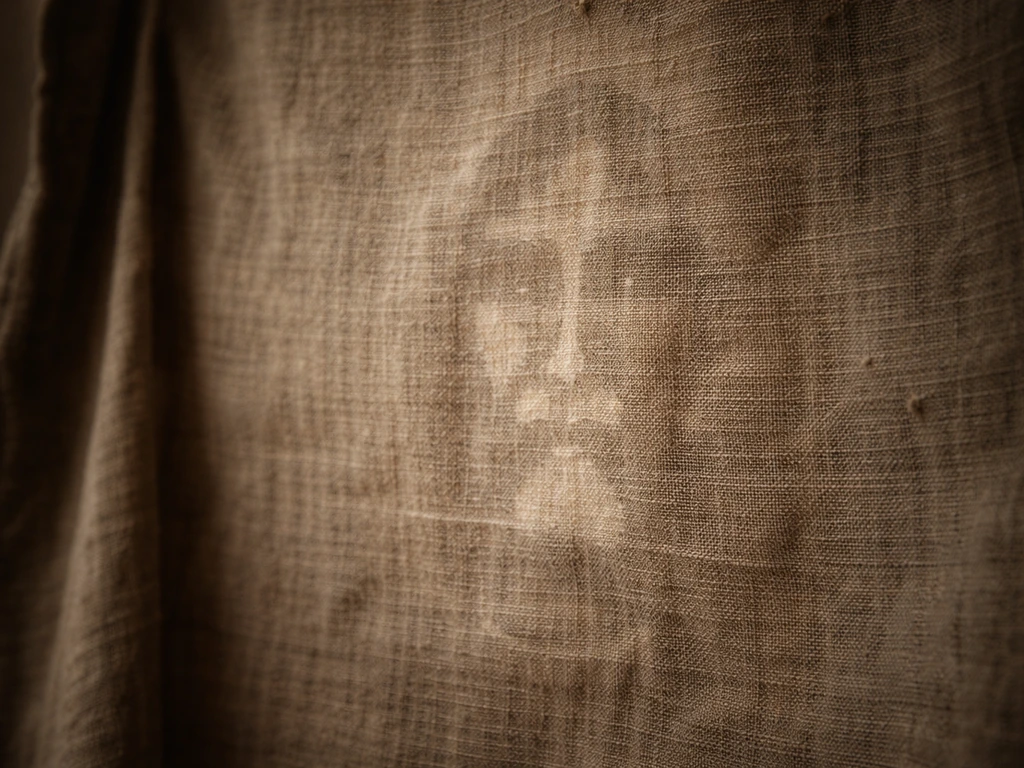
What "net worth" means for the Shroud of Turin (and why it's different)
When people search for net worth figures, they're typically looking for a wealth snapshot: assets minus liabilities, usually built from salaries, investments, and property. For the Shroud of Turin, that framework doesn't apply. There's no income stream, no portfolio, no owner trying to sell it. What people are really asking is: what is its estimated monetary value as an artifact? That's a legitimate question, but it lands in the world of appraisal and cultural-heritage law, not personal finance.
The closest parallel would be how museums, insurance underwriters, or estate lawyers think about irreplaceable objects. Even then, those valuations are typically tied to a specific purpose, like insurance replacement cost, donation appraisal, or estate settlement, rather than a live market price. For the Shroud, the situation is even more constrained because of who owns it and what legal frameworks govern it.
Who owns it, where it lives, and why it can't just be sold
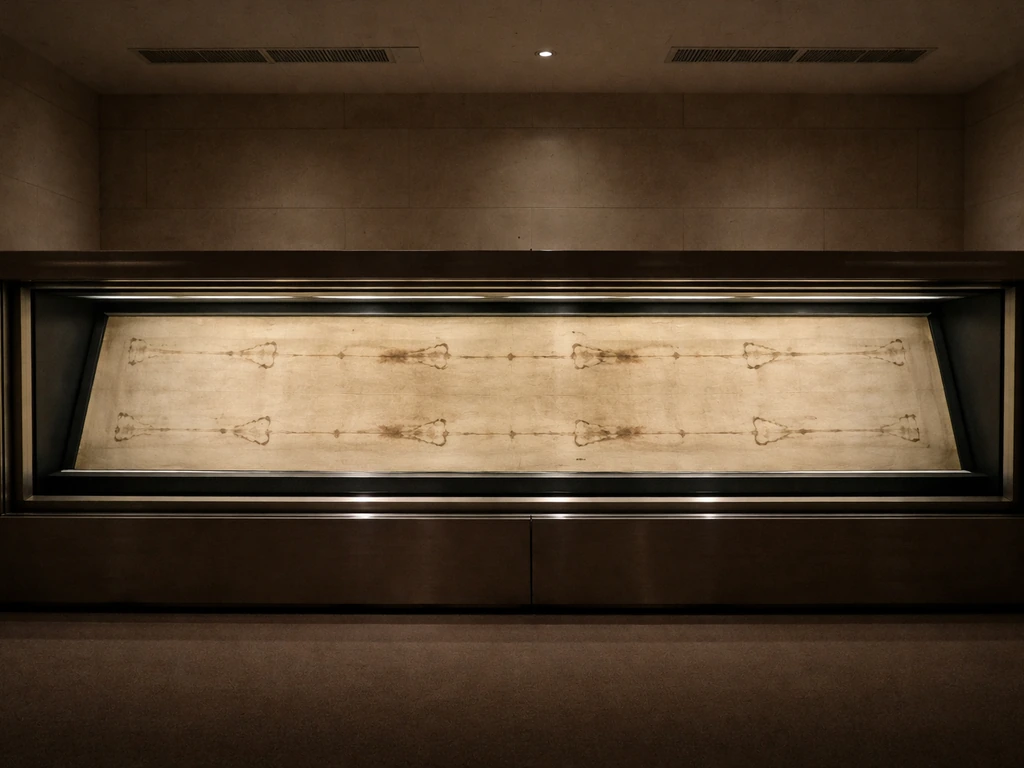
Ownership is actually well-documented. When Umberto II of Savoy died on March 18, 1983, he left the Shroud to Pope John Paul II and the Vatican in his will. The Vatican formally took ownership in October 1983. Since then, the Holy See has been the legal owner, and the Pontifical Custodian is the Metropolitan Archbishop of Turin, who oversees its physical care on an ecclesiastical basis. Custodianship transfers when archbishops change, but those are church administrative handoffs, not market transactions.
The Shroud is currently kept in a bulletproof, climate-controlled case at the Cathedral of Saint John the Baptist in Turin, Italy. It's not on permanent museum display. Public exhibitions (called ostensions) happen episodically, the most recent large-scale one was in spring 2015, and there's no fixed schedule tied to Jubilee years or any other regular calendar. Santa Sindone documents a modern ostension window for the Shroud, from April 19 through June 24, 2015 in Turin’s cathedral.
Beyond Vatican ownership, Italian cultural-heritage law adds another layer of constraint. Italy maintains extensive legal controls over cultural property, requiring certification and export documentation for objects formally declared of cultural interest. SABAP-BO (Ministero della Cultura) also notes that, under rules citing D. Lgs.
42/2004, definitive exit from national territory for cultural goods is restricted, while circulation is only allowed under defined conditions to preserve heritage integrity [Italian cultural-heritage law adds another layer of constraint](https://sabapbo. cultura. gov. it/index.
php/servizi/ufficio-esportazione). Once an object falls under that framework, free disposal or cross-border sale becomes legally complicated to the point of being practically impossible for a foreign buyer. The Shroud almost certainly falls within the scope of those protections, which means even hypothetical "what would it sell for" scenarios run into hard legal walls before reaching any market.
How rare artifacts get valued when there's no sale price
Professional appraisers working with museum-grade or religious artifacts typically consider a handful of core factors. Understanding these is useful because they're the same inputs that would drive any defensible estimate for the Shroud.
- Provenance: The documented chain of ownership and history. The Shroud's provenance is exceptionally well-documented going back centuries, including the formal 1983 Vatican deed of gift.
- Authenticity: Whether the object is what it's claimed to be. For the Shroud, this is genuinely contested (more on this below) and directly affects value.
- Comparables: What similar items have sold for. There are essentially no true comparables for the Shroud. No other artifact combines claimed first-century provenance, global religious significance, and this level of documented scientific investigation.
- Cultural and symbolic significance: How central the object is to religious practice, academic study, or public identity. The Vatican itself describes the Shroud as "a powerful symbol," while stopping short of claiming authenticity.
- Legal and ownership constraints: Whether the item can actually be sold, exported, or transferred. As discussed above, these constraints are severe.
- Condition and preservation: The physical state of the artifact and what's required to maintain it.
Appraisal frameworks from bodies like the IRS and the National Park Service both emphasize that valuation is a tightly documented process. It requires item history, provenance records, relevant comparables, and a clear statement of what type of value is being estimated (market value vs. insurance replacement value, for example). Viral "it's worth X billion" claims that don't cite a named appraiser, a documented methodology, or a specific valuation purpose don't meet that standard.
The authenticity debate and what it does to any price estimate
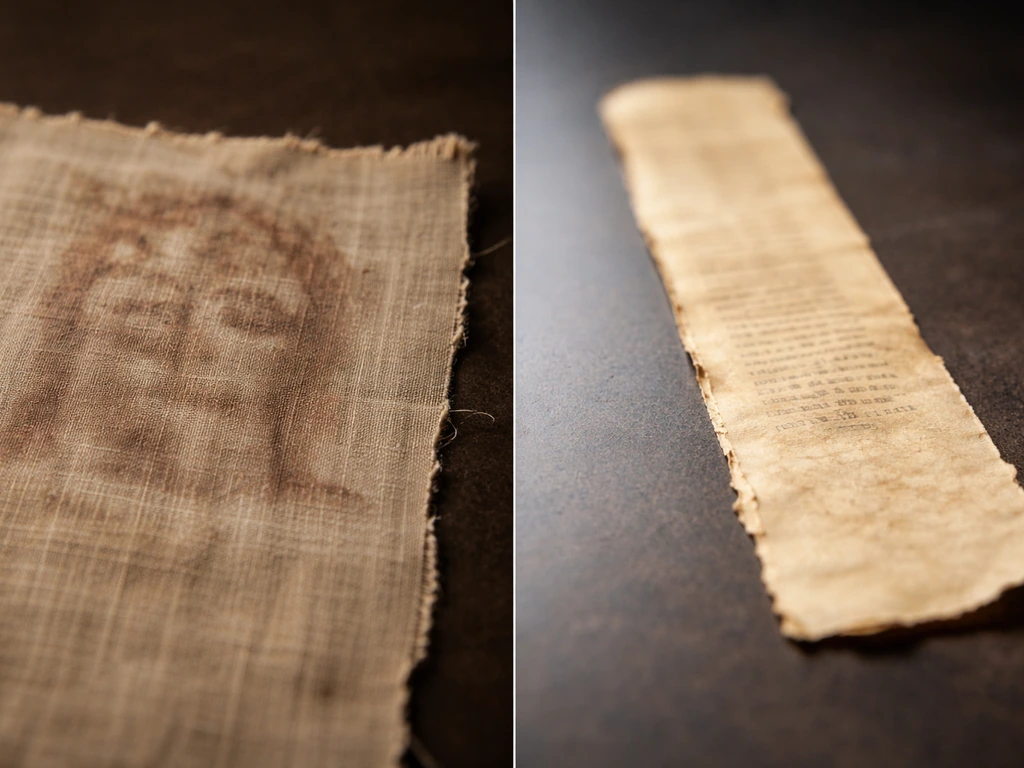
Authenticity is the single biggest variable in any valuation of the Shroud. If the cloth genuinely dates to first-century Jerusalem and is the burial shroud of Jesus of Nazareth, its religious and historical significance would be almost impossible to price. If it's a medieval artifact, it's still extraordinary but in a very different category.
The official radiocarbon dating, conducted in 1988 by labs in the United States, Switzerland, and England, placed the linen cloth's origin between AD 1260 and 1390, with at least 95% confidence. Cardinal Anastasio Ballestrero announced those results publicly. That finding, if taken at face value, would place the Shroud in the category of an exceptional medieval relic rather than a first-century artifact.
However, the radiocarbon results have been challenged repeatedly. Some researchers argue that the sample used for testing came from a repaired section of the cloth (the so-called "invisible mending" hypothesis), which would mean the dating reflects a medieval repair rather than the original linen. Those counterclaims have not been resolved to scientific consensus, and they keep the authenticity question genuinely open in some academic circles. In 2022, a public challenge offering $1 million to anyone who could demonstrate how the image was forged highlighted how unresolved the debate remains.
For valuation purposes, this uncertainty matters enormously. A definitively authenticated first-century origin would push value estimates into entirely different territory than a confirmed medieval origin. Until authenticity is settled, any price range has to carry a wide uncertainty band reflecting both scenarios.
What online appraisals and "net worth" claims actually say (and what to trust)
You'll find articles online claiming the Shroud's insurance value "could range up to $1 billion." That specific figure circulates widely, but it traces back to secondary aggregator sites, not to a named insurance underwriter, an official Vatican policy document, or a credentialed appraiser report. It's a plausible-sounding ballpark that got repeated until it became treated as fact. If you're wondering about Winta Zesu net worth too, the same idea applies: look for primary sources rather than recycled claims. If you're also curious about dan pasqua net worth, use the same rule: prefer primary sources over recycled estimates.
That doesn't mean the figure is necessarily wrong in spirit. An insurance replacement value for an object with this level of global significance, scientific study, and religious importance would likely be very large. But "likely very large" and "$1 billion per a named underwriter" are different claims. The honest answer is that no public insurance schedule for the Shroud has been released, and the Vatican has not disclosed any formal appraisal figure.
When evaluating any online valuation claim for the Shroud (or any rare artifact), apply these filters: Does the source name a specific appraiser or institution? Does it explain the valuation methodology and purpose (insurance, donation, estate)? Does it cite primary documents rather than other websites? If the answer to all three is no, treat the number as illustrative, not authoritative.
Plausible valuation scenarios and what ranges make sense

Because no public sale price or official appraisal exists, the most useful approach is to think through scenarios rather than anchor to a single number. This is how professional appraisers handle objects with no true comparables.
| Scenario | Authenticity Assumption | Plausible Value Range | Key Drivers |
|---|---|---|---|
| Insurance replacement (as medieval relic) | 1260–1390 AD per radiocarbon dating | $100M–$500M+ | Uniqueness, global recognition, condition, symbolic importance |
| Insurance replacement (as first-century artifact) | Pre-dating disputed; assumed authentic | $1B+ | Religious significance to ~2B Catholics, unmatched historical provenance |
| Hypothetical private sale (medieval) | 1260–1390 AD | Theoretically $100M–$300M range, severely constrained by Italian law and Vatican ownership | Legal barriers make this scenario nearly impossible in practice |
| Hypothetical private sale (authentic) | First-century origin confirmed | Incalculable; no credible comparable exists | Would be the most significant artifact in human history by many measures |
| Museum display / cultural heritage value | Either scenario | Not a market figure; government and ecclesiastical protection ensures it stays in public/religious custody | Italian cultural property law, Vatican ownership, public interest |
The honest takeaway from this table is that the valuation range swings wildly depending on authenticity, and the legal constraints mean hypothetical sale prices are largely academic. The insurance replacement framing is the most practically meaningful, since that's the context in which an institution like the Vatican would actually commission a formal appraisal. And even there, no disclosed figure exists.
For context, the net worth of the Catholic Church as an institution is itself a complex estimate involving real estate, art collections, and financial holdings across hundreds of countries. The Shroud, as one artifact within Vatican custody, would represent a single line item in that broader picture, and one that's legally non-liquidatable at that.
How to find defensible value ranges yourself today
If you're trying to arrive at a defensible estimate rather than just a viral number, here's a practical approach.
- Start with ownership and legal status. Confirm current Vatican ownership and Italian cultural-heritage constraints. This immediately frames what kind of valuation is even meaningful (insurance replacement, not market sale).
- Look for comparable auction results. Medieval textiles and religious relics do occasionally come to market. A comparable would need similar age, religious provenance, and condition, though nothing matches the Shroud's profile exactly. Christie's and Sotheby's historical catalogs are searchable.
- Check academic and insurance industry publications on unique artifact valuation. The NPS Museum Handbook and IRS Publication 561 both explain how appraisers approach objects with no true comparables. These are free and publicly available.
- Filter online claims against the three-question standard: named appraiser, stated methodology, primary documentation. Discard claims that fail all three.
- Acknowledge the authenticity variable explicitly in any estimate you build. The radiocarbon range of 1260–1390 is the only peer-reviewed dating result on record. Any estimate that assumes first-century authenticity is working from a hypothesis, not a confirmed finding.
- Use ranges, not point estimates. A defensible answer looks like: "Based on insurance replacement logic for a unique medieval textile with extraordinary cultural significance, a range of $100M to $500M is plausible, with significantly higher figures contingent on confirmed first-century authenticity."
The bottom line on what it's "worth"
The Shroud of Turin is almost certainly worth hundreds of millions of dollars by any reasonable insurance replacement framework, and potentially far more if first-century authenticity were ever conclusively established. But no official appraisal has been made public, no sale is legally plausible, and the $1 billion figure cited widely online is not traceable to a named underwriter or primary document. Treat it as a reasonable ceiling estimate for illustration, not a disclosed figure.
The more interesting and useful frame is that the Shroud's "value" is deliberately kept outside market logic by both the Vatican's ownership structure and Italian law. Its worth is institutional, symbolic, and religious rather than financial. Any number you see attached to it reflects an appraiser's or writer's best attempt to translate those qualities into dollars, which is inherently speculative. That's not a reason to dismiss the question, but it is a reason to hold any specific figure loosely.
FAQ
What does “insurance replacement value” mean for an object like the Shroud, and why is it different from “market value”?
Insurance replacement value estimates what it would cost to recreate or replace the asset’s function and significance, not what someone would pay at a free auction. For rare, non-substitutable religious artifacts, the “replacement” concept can be closer to commissioning a comparable museum-grade equivalent, securing equivalent custodial protections, or covering restoration and documentation costs, so it can be very high even if market value is effectively unpriceable.
Why do online articles keep repeating the same “up to $1 billion” figure?
Most repeated numbers come from secondary aggregators that summarize earlier claims without publishing a named underwriter, a valuation report, or an explicit scope (insurance, donation, or estate). If the claim does not include a purpose statement, a date, and an appraiser or institution, you should treat it as a narrative estimate rather than an auditable valuation.
If the Shroud is legally non-liquid, can it still be “sold,” and how does that affect any valuation?
Even if a theoretical price is imaginable, Italian cultural-heritage protections and export restrictions make actual transactions legally difficult or practically impossible for foreign buyers. Valuations that assume normal buyer-seller behavior can therefore mislead, because they implicitly rely on a market that cannot legally exist.
How do appraisers handle “no comparable sales,” which seems to apply here?
When there are no true comparables, appraisers shift to a blended approach, often combining expert judgment, comparable valuations of similarly significant heritage items, and a clearly defined value purpose (for example, insurance replacement rather than market value). The uncertainty band should widen dramatically when provenance and authenticity are not settled.
Does the radiocarbon dating debate directly change the dollar value estimates?
Yes, substantially. A first-century authentication would place the Shroud in a different historical category than a medieval relic, changing how experts model uniqueness and scholarly significance. In practical valuation terms, it expands the range because the valuation purpose (religious artifact significance, insurance coverage, or restoration commissioning) responds differently to “confirmed” versus “contested” origin.
What would make authenticity “settled” enough to tighten valuations?
Valuation becomes more defensible when there is repeatable, well-documented testing on clearly defined fiber locations, transparent chain-of-custody for samples, and a consensus assessment that addresses major counterclaims (such as sampling from repaired areas). Until then, most valuation uncertainty should be treated as structural, not temporary.
Could the Vatican choose to disclose a specific number for the Shroud, and would that automatically make it authoritative?
They could theoretically disclose an insurance coverage framework or an appraisal figure, but disclosure is not the same as creating a market price. Even with disclosure, you would still need to know the valuation purpose, policy limits, and whether the figure is replacement-cost, agreed value, or a hypothetical market scenario.
If I only care about “how much is it worth,” what practical number should I use?
Use a scenario range rather than a single headline figure. If your goal is practical comparability, focus on insurance replacement style ranges with an explicitly stated purpose, and discount any number that lacks method, date, and a responsible underwriter or appraisal organization.
How should I interpret “net worth” phrasing when searching for the Shroud?
Treat “net worth” as an SEO term, not a financial metric. The Shroud has no income stream and no owner selling it, so a defensible estimate usually comes from appraisal frameworks (insurance or heritage valuation) rather than assets-minus-liabilities calculations.
Next Articles

Net Worth of the Catholic Church: What Counts Worldwide
Learn what net worth means for the Catholic Church worldwide, what assets count, why estimates vary, and how to verify t
Ava Frati Net Worth Estimate: Range, Income Sources, and How to Verify
Ava Frati net worth range estimate, income sources, and a checklist to verify net-worth claims reliably.

Dr Abati Net Worth: Estimated Range and How It’s Calculated
Estimated Dr Abati net worth range explained, plus how to verify the right person and calculate wealth from public data.