
There is no single famous person universally known as 'Chief Priest' with a widely published net worth figure. The phrase could point to a high-ranking religious leader in a specific faith tradition, a named individual who goes by that title (such as a traditional ruler, spiritual leader, or cultural figure in West Africa or elsewhere), or even a stage name used in entertainment. Before you can trust any number, you need to nail down exactly which 'Chief Priest' you are researching, because the estimates, the data sources, and the reliability of any figure will vary enormously depending on who you actually mean.
Chief Priest Net Worth: How to Estimate and Verify It

Marcus Kellerman
29 Apr 2026

What 'Chief Priest' Actually Refers To

The term has layered meanings across different contexts. In the Hebrew Scriptures, 'chief priest' is essentially an alternate title for 'high priest,' referring to the single highest religious official in ancient Israelite worship. In the Christian New Testament, the Greek word 'archiereis' is used in the plural, 'chief priests', and describes a broader group: the sitting high priest, deposed former high priests, and likely the heads of the 24 priestly divisions described in 1 Chronicles and 2 Chronicles. These are historical and theological uses, not modern individuals with a net worth to look up.
In a contemporary search context, 'Chief Priest' most commonly refers to one of a few things: a traditional or indigenous religious leader (common in Yoruba, Igbo, or other West African traditions, where the title carries significant cultural authority), a high-ranking cleric within a structured religious institution (such as a Roman Catholic bishop, a patriarch in Orthodox Christianity, or a senior pastor in a Pentecostal megachurch), or occasionally an entertainer or public figure who uses 'Chief Priest' as a nickname or stage name. If you are searching on a net worth database, the most likely intent is either a named African traditional leader or a prominent religious figure whose wealth has been publicly discussed.
How to Narrow Down the Right Person
- Add a country or region to your search (e.g., 'Chief Priest Nigeria net worth' or 'Chief Priest Ghana net worth') to filter results to a specific tradition or individual.
- Check whether the person holds a formal institutional title (bishop, cardinal, archbishop) vs. a traditional/cultural title — the financial picture differs significantly.
- If the name is associated with entertainment, sports commentary, or social media, treat it as a stage name search and look for the individual's real name for more reliable financial records.
- Look for context clues in news coverage: titles like 'His Royal Majesty' or 'Ooni' signal traditional royalty; 'Most Rev.' or 'Cardinal' signal formal Christian clergy.
Why Net Worth for Religious Leaders Is So Hard to Pin Down
Religious leaders sit in a genuinely difficult category for net worth research. The core problem is that personal wealth and institutional wealth frequently overlap in ways that are hard to untangle from the outside. A bishop or chief priest may live in a church-owned residence, drive an organization-owned vehicle, and receive benefits paid directly by the institution, none of which technically belongs to them personally, but all of which reflects a very comfortable standard of living. If you are looking up Dioceldo sy net worth, remember that some reported wealth may mix personal assets with church or institutional benefits bishop or chief priest. Counting those assets as personal net worth inflates the figure; excluding them entirely can understate their real financial position.
Roman Catholic canon law (Book V of the Code of Canon Law) requires clerics responsible for ecclesiastical goods to maintain organized financial records and submit annual reports, but those records belong to the institution, not the individual, and they are rarely made public in detailed form. The Holy See's 2021 Motu Proprio on financial transparency did push for periodic personal declarations from cardinals heading dicasteries and other senior officials, with false or omitted declarations treated as a serious disciplinary offense. Vatican News summarizes the April 2021 Motu Proprio as requiring Vatican management to sign anti-corruption declarations that are repeated every two years personal declarations from cardinals heading dicasteries and other senior officials. Even so, those declarations are internal documents, not public disclosures like SEC filings or tax returns.
Traditional chief priests in indigenous religions face a different but equally tricky transparency problem. Their authority often comes with land rights, gifts from community members, and ceremonial income that is communal in nature rather than personal salary. There is no filing requirement, no public payroll, and frequently no formal banking record that an outside researcher can access. Estimates in these cases are almost always built from indirect evidence: lifestyle reporting, known land holdings, business affiliations, and interviews.
How Net Worth Estimates Are Actually Built

On a net worth database, estimates for religious leaders are assembled from several layers of evidence, each with its own reliability ceiling. Here is what researchers typically use and how much weight each source carries.
- Salary and stipend data: For clerics in formal institutions, diocesan salary scales are sometimes published or reported. Catholic bishops in the United States, for example, earn a modest formal salary (often in the range of $30,000 to $50,000 annually) plus a housing allowance. Pentecostal megachurch pastors can earn significantly more — some in the six- or seven-figure range — when compensation packages and book royalties are included. These figures form the income baseline.
- Known real estate and property holdings: Land registry filings, property tax records (where public), and media reporting on residences or land ownership feed directly into asset estimates. This is often the largest variable for traditional leaders.
- Business and investment involvement: If a religious leader sits on a company board, holds a stake in a media company, or runs a for-profit ministry enterprise, those interests are often discoverable through corporate registration records or media coverage.
- Credible media and investigative reporting: Long-form journalism and investigative pieces by outlets covering religion or wealth in specific countries are among the most reliable secondary sources, especially when they cite specific figures from documents or on-record sources.
- Lifestyle and indirect indicators: Travel patterns, vehicles, public appearances at high-cost events, and confirmed philanthropic donations all serve as cross-checks on the primary estimate. They rarely change the headline number but can confirm whether an estimate is in the right ballpark.
Net Worth Ranges for Chief Priest Figures
Because 'Chief Priest' is not a single universal identity, the honest answer is a range of ranges depending on which type of figure you are researching. The table below gives a practical orientation based on common search contexts.
| Type of Chief Priest | Estimated Net Worth Range | Primary Data Sources | Reliability |
|---|---|---|---|
| Roman Catholic bishop/cardinal (personal wealth) | $500K to $5M+ | Diocesan salary scales, property records, book/speaking income | Moderate — institutional assets excluded |
| West African traditional chief priest (major kingdom) | $1M to $20M+ | Land records, media reporting, business affiliations | Low to moderate — largely indirect |
| Pentecostal/Charismatic senior pastor using the title | $1M to $50M+ | Church financial disclosures (rare), book sales, media deals | Low to moderate — wide variance |
| Entertainment figure / stage name 'Chief Priest' | Highly variable ($100K to $10M+) | Music/content revenue, social media, interviews | Moderate if real name is known |
These ranges are starting points, not conclusions. A specific named individual will have a much tighter estimate once you identify them correctly and locate relevant data. For context, researching the Roman Catholic Church's overall institutional wealth produces figures in the hundreds of billions globally, but that is institutional net worth, not any individual cleric's personal holdings. Similar disambiguation challenges come up when researching figures like Santo Dettore, Dioceldo Sy, or Tod Sacerdoti, all of whom operate in religious or spiritual leadership contexts where personal and institutional assets need to be separated carefully.
The Variables That Can Swing Estimates Dramatically
Even when you have identified the right person, five factors routinely cause net worth estimates to vary by millions of dollars. Understanding them helps you judge whether a number you find is likely a high-end outlier or a conservative floor.
- Housing arrangements: If a religious leader lives in an institution-owned residence (a bishop's palace, a parsonage, a traditional palace), that asset may or may not be counted as personal wealth. Researchers who include it will report a higher number; those who restrict to personal legal ownership will report lower.
- Gifts and donations treated as income: In many traditions, cash gifts from followers, ceremonial tribute payments, and community donations flow directly to the leader. These are rarely documented formally, and estimates of their annual value can range from tens of thousands to millions depending on the leader's prominence.
- Family and inherited wealth: Some chief priests come from wealthy families or inherit land and business interests. Without knowing the family background, an estimate can miss a significant asset base entirely.
- Business and media interests: A religious leader with a television ministry, a publishing imprint, or a stake in a school or hospital network has income streams that dwarf any formal salary. These often require corporate record searches to surface.
- Retirement or pension provisions: Formal religious institutions often provide retirement housing and income support, which effectively functions as deferred compensation. This rarely appears in published estimates but represents real economic value.
How to Verify and Interpret What You Find

Once you have an estimate in front of you, treat it as a hypothesis to test, not a fact to accept. If you are trying to find the tod sacerdoti net worth, use the same identification and verification steps to avoid mixing up different “Chief Priest” figures. Here is a practical process for doing that responsibly.
- Check whether the source separates personal from institutional assets. An estimate that says 'Chief Priest X is worth $50 million' should specify whether that includes church or organizational property. If it doesn't, the number is likely inflated.
- Look for a named publication date. Net worth estimates go stale quickly. A figure from five or more years ago may be significantly off if the person has retired, taken on new business ventures, or had changes in land value.
- Cross-reference at least two independent sources. If a number only appears on a single aggregator site without a named source, treat it as speculative. If two credible outlets (a national newspaper, an investigative outlet, or a formal church financial report) converge on a similar range, confidence goes up.
- Watch for red flags: round numbers with no methodology explanation (e.g., exactly '$10 million' with no breakdown), figures that conflate the leader's net worth with their organization's budget, and any estimate that lacks a geographic or institutional context.
- Use primary sources when possible. Property registries, corporate filings, and (where available) institutional financial reports are always more reliable than aggregated estimates. For Catholic institutions, the Vatican's financial transparency framework means some senior officials' declarations exist, even if they aren't publicly searchable.
- Accept the uncertainty range. For most chief priest figures, a responsible estimate will be expressed as a range (e.g., '$2 million to $8 million') rather than a single precise number. If you see a single precise figure, that is a sign the source is projecting false confidence.
Your Best Next Step Right Now
If you came here with a specific person in mind, start by searching their full name combined with their country and any known institutional affiliation. That will surface the most targeted estimate available and let you apply the verification steps above. If you genuinely are not sure which 'Chief Priest' you meant, the disambiguation table above is your fastest filter, match the type of leader to the category, note the realistic range, and then dig into primary records or credible regional journalism to narrow it further. The goal is to walk away with a well-bounded estimate you understand, not a single number you have to take on faith.
FAQ
How can I tell whether a “Chief Priest” net worth claim is about personal wealth or church or institutional assets?
Look for phrasing that ties the figure to an organization-owned residence, staff payroll, church business income, or “benefits” rather than salary. If the source does not separate personal bankable assets from institutional funding, treat the number as an aggregate estimate and ask what portion is attributed to the person versus the institution.
Why do net worth sites sometimes show wildly different numbers for the same chief priest name?
Most differences come from mixing identities (same title, similar names, different countries) and from assumptions about unreported assets. A practical check is to compare the assets listed (real estate, businesses, investments) and see whether they match known biographies, appointment timelines, or documented land holdings.
What primary documents or records can actually be used to verify a religious leader’s wealth?
For structured institutions, prioritize official appointment and asset-control documents like stewardship reports, court records involving property, or documented disclosures required by the institution’s internal governance. Even then, many reports belong to the entity, so verification usually focuses on property control and responsibility, not a single publicly stated “net worth.”
If the chief priest is a traditional religious leader, how do I estimate wealth without relying on rumors?
Use indirect, corroborated indicators: confirmed land registry entries (where available), verifiable business registrations tied to the community or lineage, and multiple independent reports about major assets. Be cautious with “ceremonial income” claims, because they may reflect communal revenue rather than transferable personal wealth.
Should I use exchange-rate conversion when comparing a chief priest net worth estimate from older years?
Yes, but convert using the year the estimate was made, not today’s rate. Also check whether the site inflated values by converting assets at purchase prices, replacement costs, or speculative valuations, which can create artificial spikes across time.
Can I treat a “net worth range” as accurate enough for research or journalism?
Only if you can cite how the range was built and what evidence supports each bound. If the methodology is missing, require a sanity check by triangulating at least two evidence types (property, business control, credible local reporting) and documenting what you cannot verify.
What’s the best way to avoid confusing similarly titled leaders when searching “chief priest net worth”?
Use disambiguation terms in your search query, like full name, the specific faith tradition, the city or region, and the institution or lineage. Then verify with appointment dates or ordination records to confirm you have the same person before comparing net worth numbers.
Do religious leaders always live off personal wealth, or can their lifestyle be funded indirectly?
Lifestyle can be indirectly funded, for example through clergy housing owned by the religious body, vehicles allocated by the institution, and services paid for by organizational budgets. When you see “luxury” details without a breakdown of who pays, it is safer to label the claim as “lifestyle-consistent spending” rather than direct personal net worth.
What’s a common mistake when people research “tod sacerdoti net worth” or other similarly themed queries?
Assuming the title refers to one universally recognized person or one universal role. In practice, titles and nicknames vary, so the correct approach is the same as any chief priest search: confirm identity, confirm jurisdiction or tradition, then only compare figures that clearly refer to that same individual.
How should I respond when a source refuses to explain where the number comes from?
If there is no stated asset basis (property, equity, business ownership, or documented income) and no sourcing of evidence, treat it as unverified marketing content. Your next step should be triangulation with at least one concrete record and one credible regional account that ties assets to the specific person.
Next Articles

Santo Dettore Net Worth 2026: Estimate, Sources, How It’s Calculated
Santo Dettore net worth estimate for 2026 with sources, calculation method, and why figures vary across sites
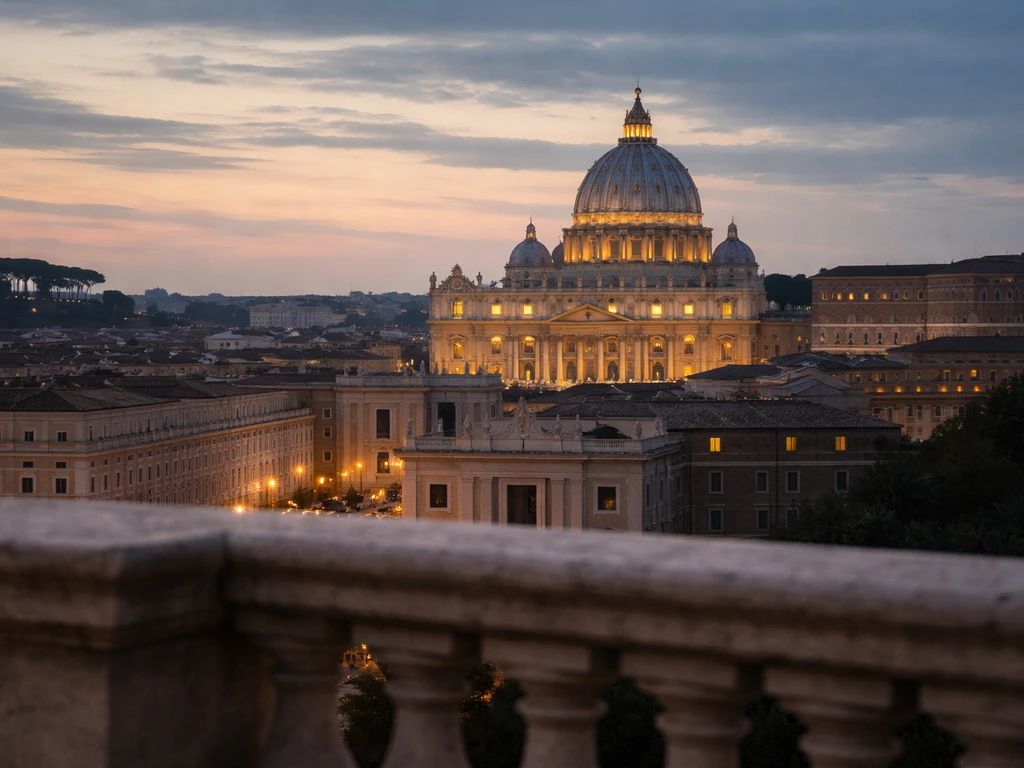
Roman Catholic Church Net Worth: Estimates and How They’re Derived
Estimates of Roman Catholic Church net worth, how assets and liabilities are counted, and how to cross-check credible fi

Ava Frati Net Worth Estimate: Range, Income Sources, and How to Verify
Ava Frati net worth range estimate, income sources, and a checklist to verify net-worth claims reliably.